Concrete Spalling and Beam-Column Failure in a 35-Year-Old Building in Nungambakkam
The Discovery: Spalling Concrete and Critical Junction Cracks
The residents of this G+2 residential complex in Nungambakkam—comprising Block A and Block B—commissioned a forensic structural damage inspection after observing chunks of falling concrete and wide cracks opening across primary load-bearing elements.
Our visual condition audit mapped severe structural decay across both blocks: on the ground floor columns of Block A, large sections of concrete cover had spalled off completely, leaving the primary vertical rebar cage exposed and heavily corroded. At the same level, wide diagonal shear cracks were recorded at the beam-column junctions.
In Block B, vertical column cracks exceeded 3 mm in width—a critical threshold under IS 456:2000 indicating active structural movement far beyond serviceability limits. Ceiling slabs below toilets and balconies exhibited extensive dampness and rust weeping.
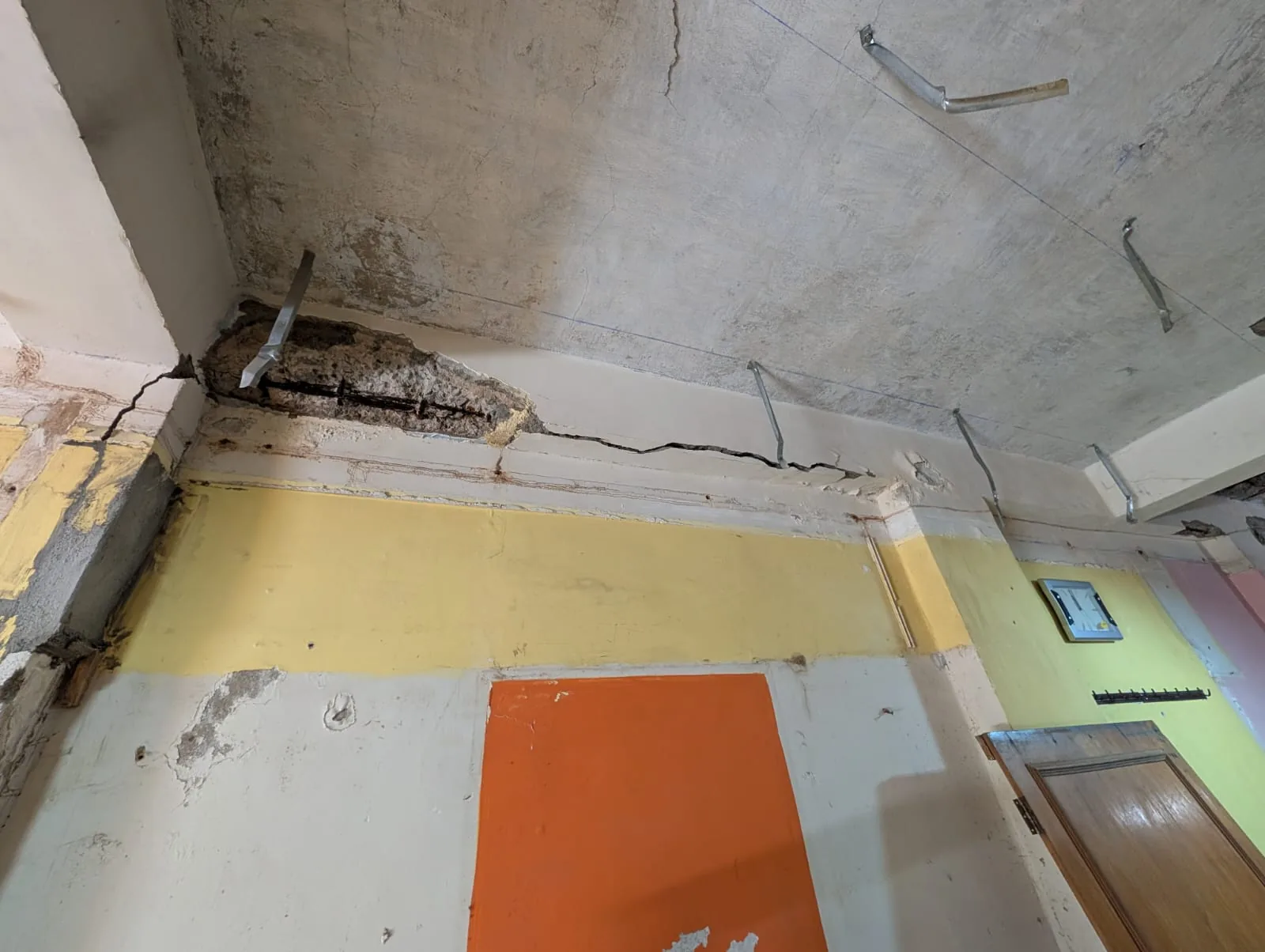
Forensic Pathology: Three Decades of Electrochemical Corrosion
The structural breakdown was the outcome of an irreversible electrochemical reaction operating unhindered for 35 years. The wet areas in both blocks lacked an effective scientific waterproofing membrane. Chronic water percolation from daily toilet usage and monsoon rain penetrated the concrete slabs.
In sound concrete, high alkalinity (pH > 12.5) maintains a passive passivation layer protecting embedded steel. As carbon dioxide and moisture permeate the matrix, carbonation destroys this alkaline shield. Active corrosion initiates on the steel surface.
Because ferrous rust expands to up to 600% of the volume of the original steel, it exerts massive radial bursting pressure that fractures concrete from the inside out. Delaminated cover collapses, exposing the rebar to accelerated atmospheric oxidation and reducing member load-bearing capacity.
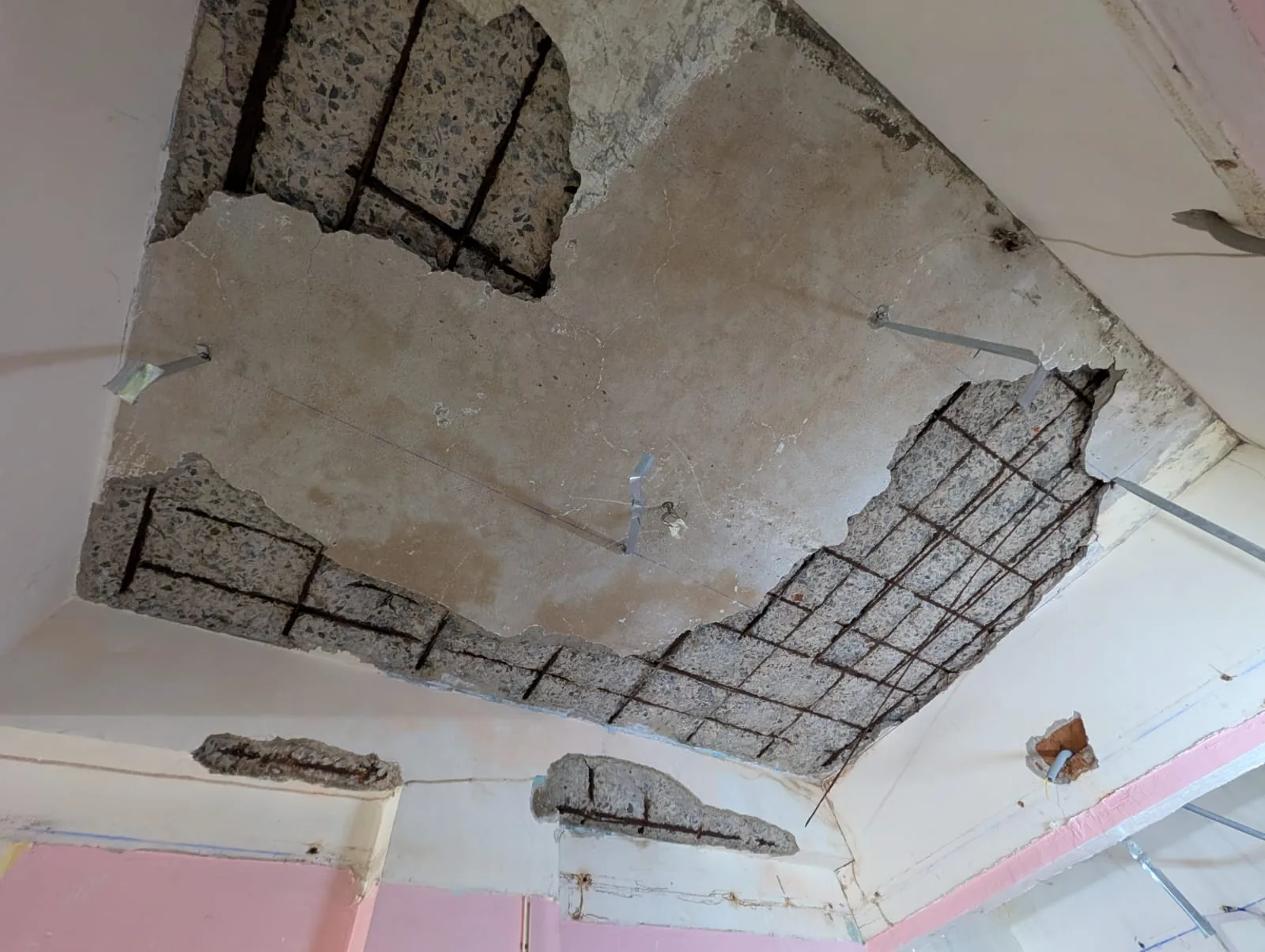
Recommended Code-Compliant Remediation Sequence
Executing cosmetic repairs on cracked beam-column junctions without load relief and root-cause eradication is structurally dangerous. Structural Sense formulated a strict 4-stage engineering specification:
Immediate Structural Shoring & Load Bypassing
Before any chipping or repair work commences, install heavy-duty mechanical steel props around all affected ground-floor columns and beam spans to safely transfer dead and live loads away from compromised members.
Systematic Wet-Area Scientific Waterproofing
Eliminate the active moisture catalyst by stripping old floor tiles in all affected bathrooms and balconies. Apply a high-performance scientific waterproofing system in Chennai directly to bare structural slabs, verified by a mandatory 48-hour ponding test.
Deep NDT Diagnostic Testing & Geotechnical Verification
Perform on-site NDT testing services (UPV and electromagnetic cover scanning) to map internal concrete voids. Conduct geotechnical soil testing to confirm that three decades of percolation have not reduced foundation bearing capacity.
Section Rebuilding & Micro-Concrete Jacketing / CFRP Retrofit
Clean rebar to SA 2.5 bright metal standard and apply zinc-rich epoxy anti-corrosion primer. Execute micro-concrete column jacketing or CFRP composite strengthening to restore full design moment and shear transfer capacity.
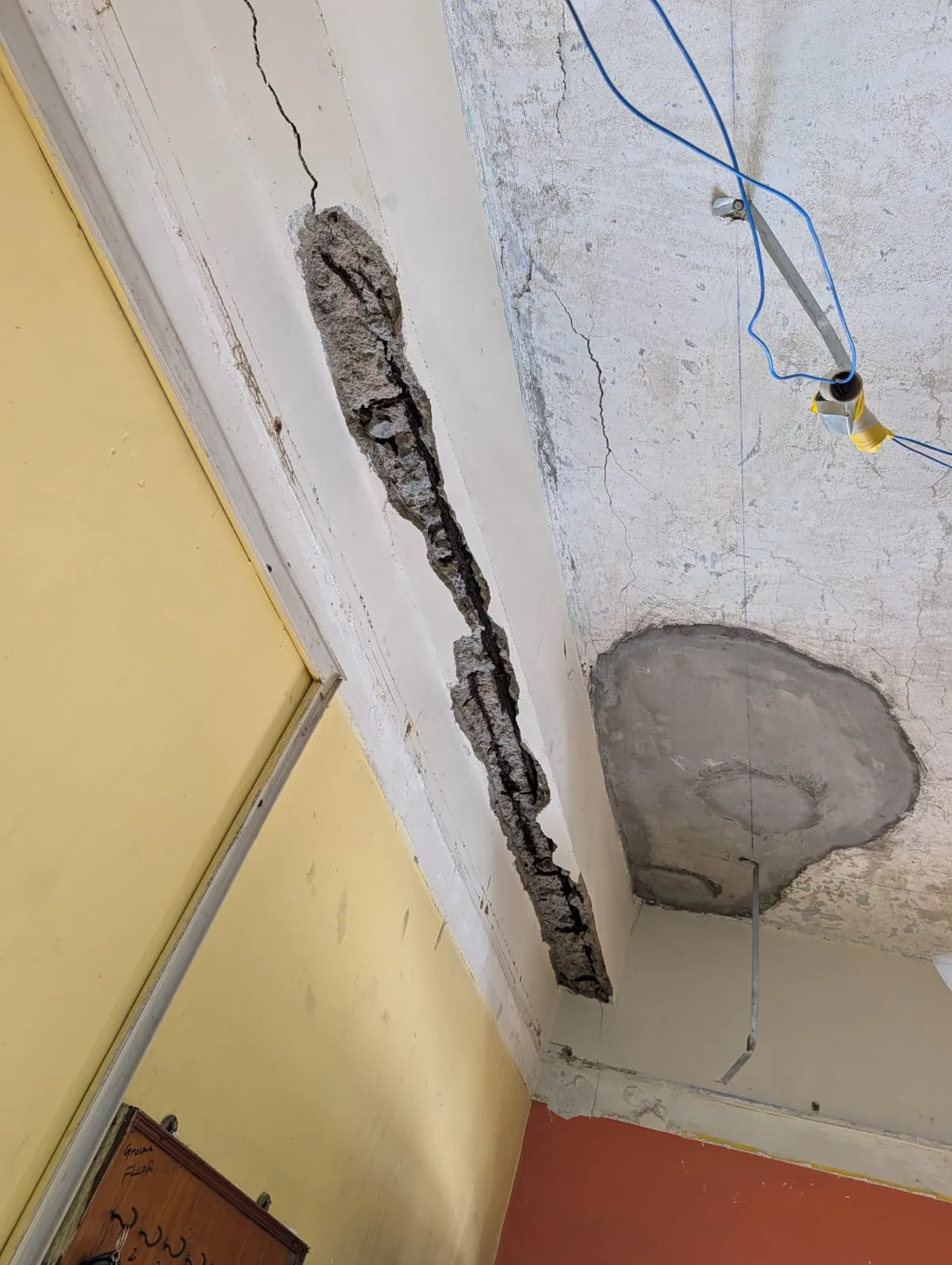
Audit Findings: Defect Severity & Action Prioritization
| Structural Element | Observed Forensic Defect | Urgency Level | Recommended Engineering Remedy |
|---|---|---|---|
| Ground Floor Columns (Block A) | Cover Spalling & Heavy Rebar Section Loss | Immediate Shoring | Mechanical Props + Zinc Primer + Micro-Concrete Jacketing |
| Beam-Column Junctions | Diagonal Shear Cracks >3mm | Immediate Shoring | Load Relief + Low-Viscosity Epoxy Injection + CFRP Wrap |
| First Floor Columns (Block B) | Vertical Flexural/Shear Cracking >3mm | High Priority | Sectional Re-profiling + Structural Fiber Strengthening |
| Toilet & Balcony Slabs | Active Water Seepage & Rust Weeping | High Priority | Complete Tile Removal + Scientific Waterproofing Membrane |
| Exterior Building Facades | Thermal & Plaster Crazing Cracks | Standard Action | V-Groove Raking + Weatherproof Elastomeric Coating |
Preventive Pathology: Why Waterproofing Failure Becomes a Structural Emergency
The severe structural distress in this building did not begin as an engineering flaw—it began as a neglected waterproofing maintenance item. In Chennai's humid coastal climate, bathroom and balcony waterproofing membranes reach the end of their service life in 10 to 12 years.
When waterproofing is left unrenewed for 35 years, moisture travels through structural concrete unimpeded, initiating the aggressive corrosion cycle that destroys columns and frame junctions. Periodic waterproofing renewal is the single most critical investment to safeguard aging RCC buildings.
When Cracks Appear at a Beam-Column Junction, the Investigation Cannot Wait.
Beam-column fractures and spalling concrete indicate that the structural frame is compromised. Schedule a certified forensic damage inspection today.
Frequently Asked Questions on Beam-Column Joint Cracks
Explore Related Forensic Case Studies & Engineering Guides
Building Vibration & Severe Beam Deflection Fix
Forensic NDT investigation and CFRP composite retrofitting specifications for a severe floor vibration issue.
Settlement Cracks & Expansive Clay Soil Distress
Diagnosing deep 45-degree diagonal masonry wall cracks caused by fluctuating groundwater and clay movement.
Concrete Falling from Ceiling & Rusted Steel Repair
Forensic remediation of spalling ceilings and corroded reinforcement in a 35-year-old coastal apartment.
Ceiling Cracks & Roof Safety Guide for Homeowners
How to distinguish between superficial paint crazing and hazardous structural slab deflection cracks.
Concrete NDT Testing: Rebound Hammer & UPV Explained
Complete guide to measuring in-situ compressive strength, voids, and rebar corrosion without destruction.
CMDA Structural Stability Certificate (Form B & C)
Understanding legal safety audits, building fitness criteria, and engineer certification under TN Public Buildings Act.