Structural Strengthening and Repair
in Chennai.
Structural Sense is an ISO 9001:2015 certified structural repair and retrofitting specialist in Chennai. Demolition is a failure of engineering. Using advanced carbon fiber composites (CFRP), precision micro-concrete jacketing, and forensic diagnostics, we upgrade structural capacity and return compromised buildings to 30+ years of active design life.
Zero unnecessary demolition • Permanent monolithic bonding
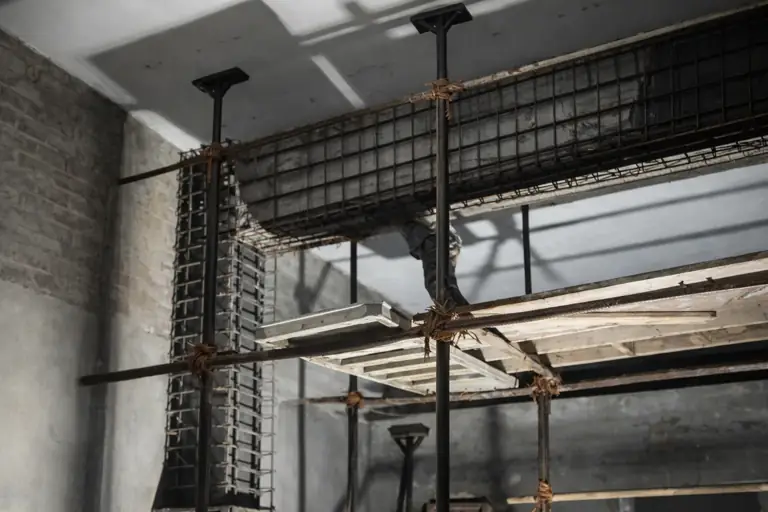
Engineering a cure, not just patching a symptom.
Forensic Precision
We identify the true structural root cause—be it carbonation, rebar corrosion, foundation settlement, or load deficiency—before prescribing an intervention. Guesswork is never an engineering standard.
Monolithic Material Synergy
Restoration requires exact chemical and thermal compatibility. We mandate aerospace-grade CFRP carbon fibers, low-viscosity epoxy resins, and M60+ micro-concretes that bond monolithically with your existing structure.
Sustainable Real Estate Assets
Demolition is costly, disruptive, and carbon-heavy. Our strengthening techniques upgrade axial and moment capacities, unlocking safe vertical floor expansions and industrial repurposing without structural teardown.
Diagnosis Before
Intervention.
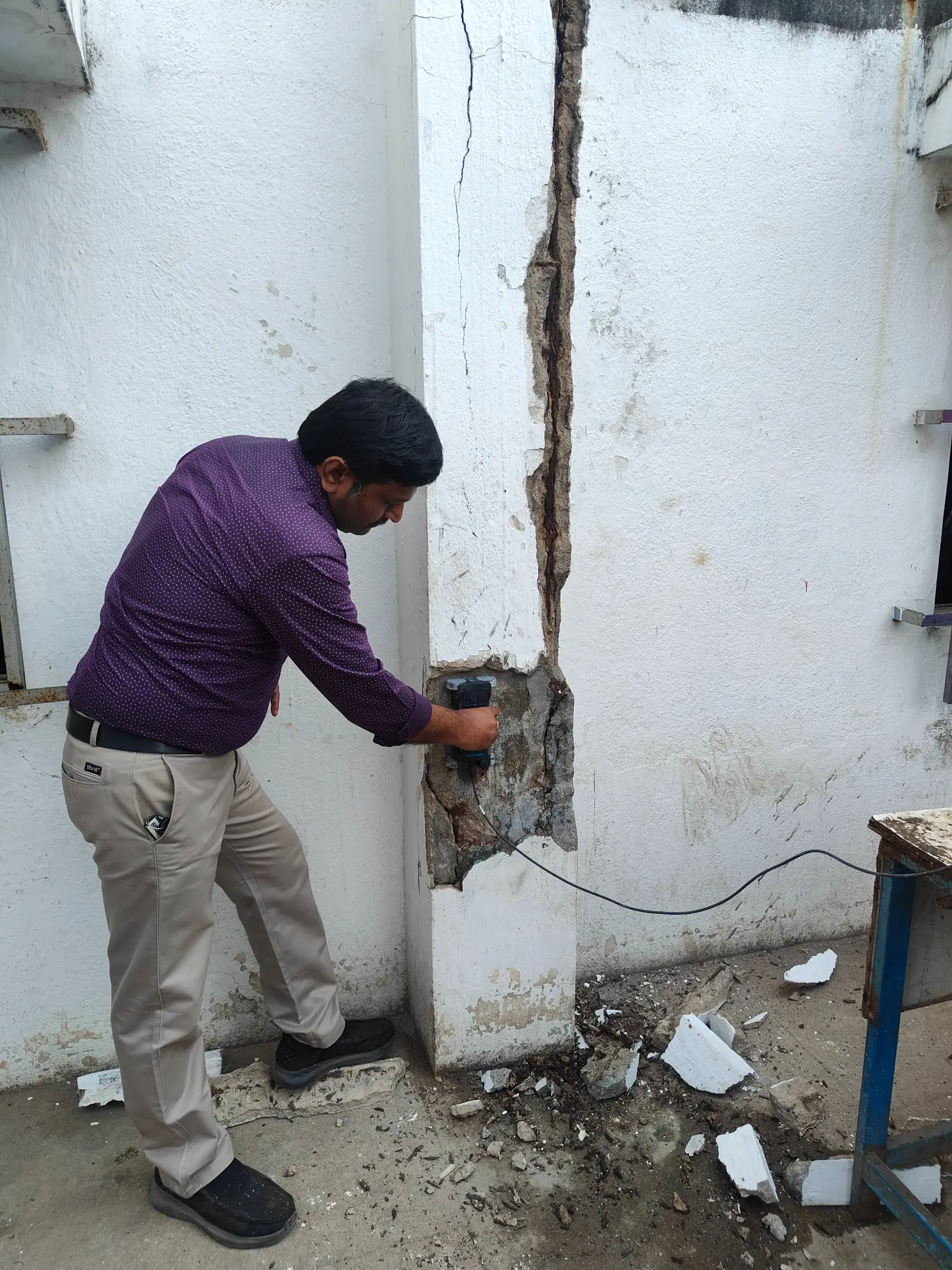
A high-performance structural repair is impossible without physical data. Before applying a single gram of composite fiber or micro-concrete, we utilize forensic Non-Destructive Testing (NDT) to map the true residual capacity of your structure.
Explore Forensic NDT Testing Services →In-Situ Compressive Strength Profiling
Using Rebound Hammer and Ultrasonic Pulse Velocity (UPV) to map localized concrete strength (fck) across critical load-bearing columns and beams.
Rebar Corrosion & Carbonation Depth
Half-cell potential mapping and phenolphthalein chemical depth testing to assess internal steel depassivation and oxidation severity.
Core Extraction & Micro-Crack Profiling
Calibrated micro-core sampling to evaluate compressive strength under true laboratory crushing loads for precise load redistribution modeling.
Advanced Retrofitting. Engineered for Permanence.
State-of-the-art structural reinforcement techniques customized for building typology, distress severity, and operational constraints.
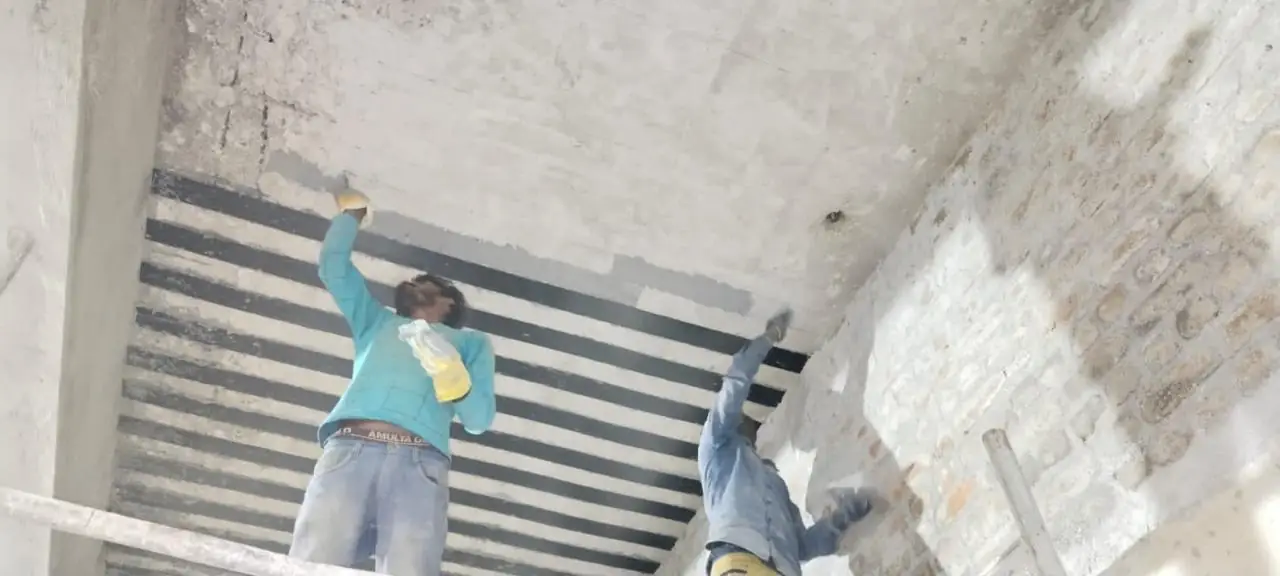
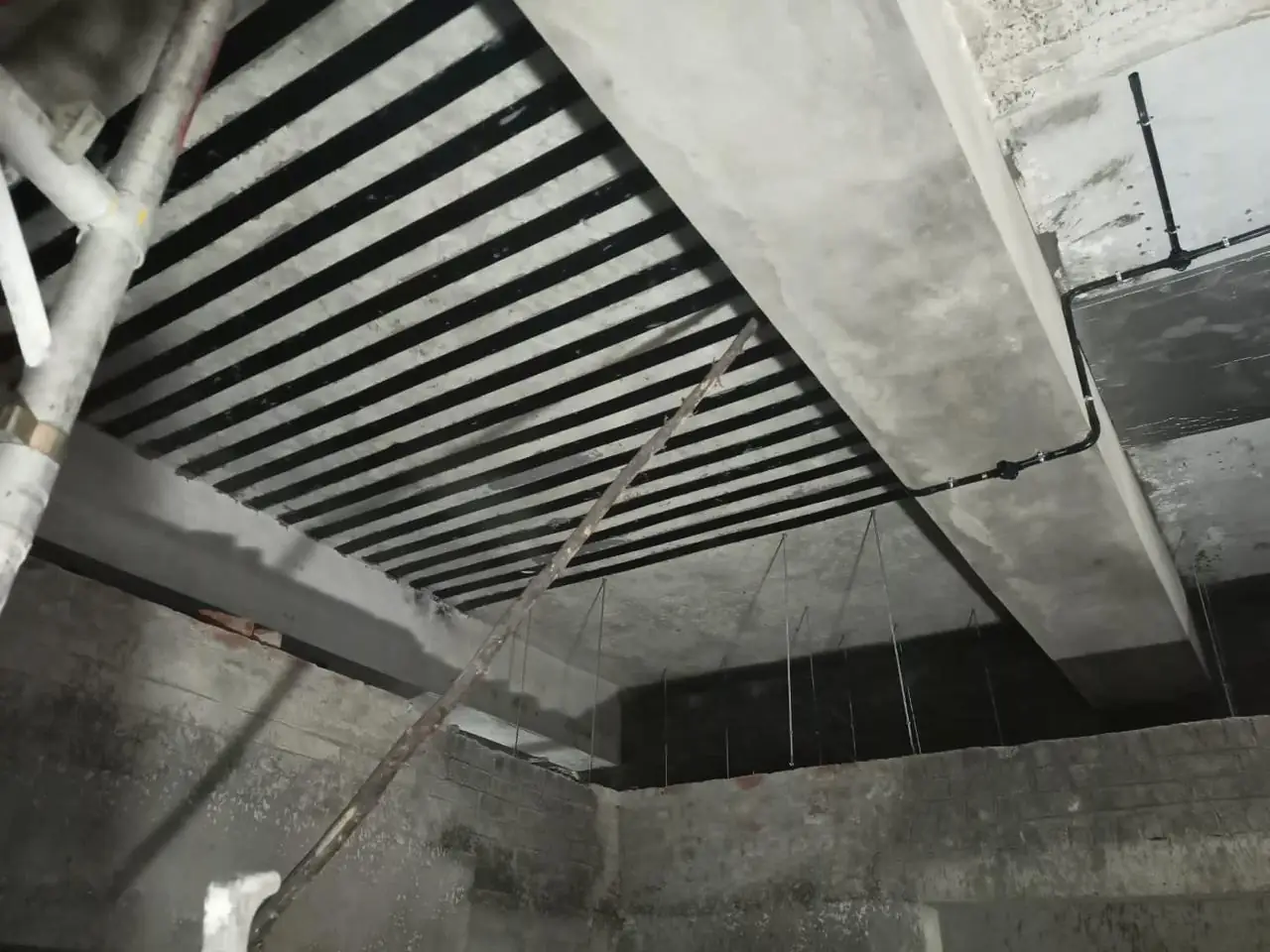
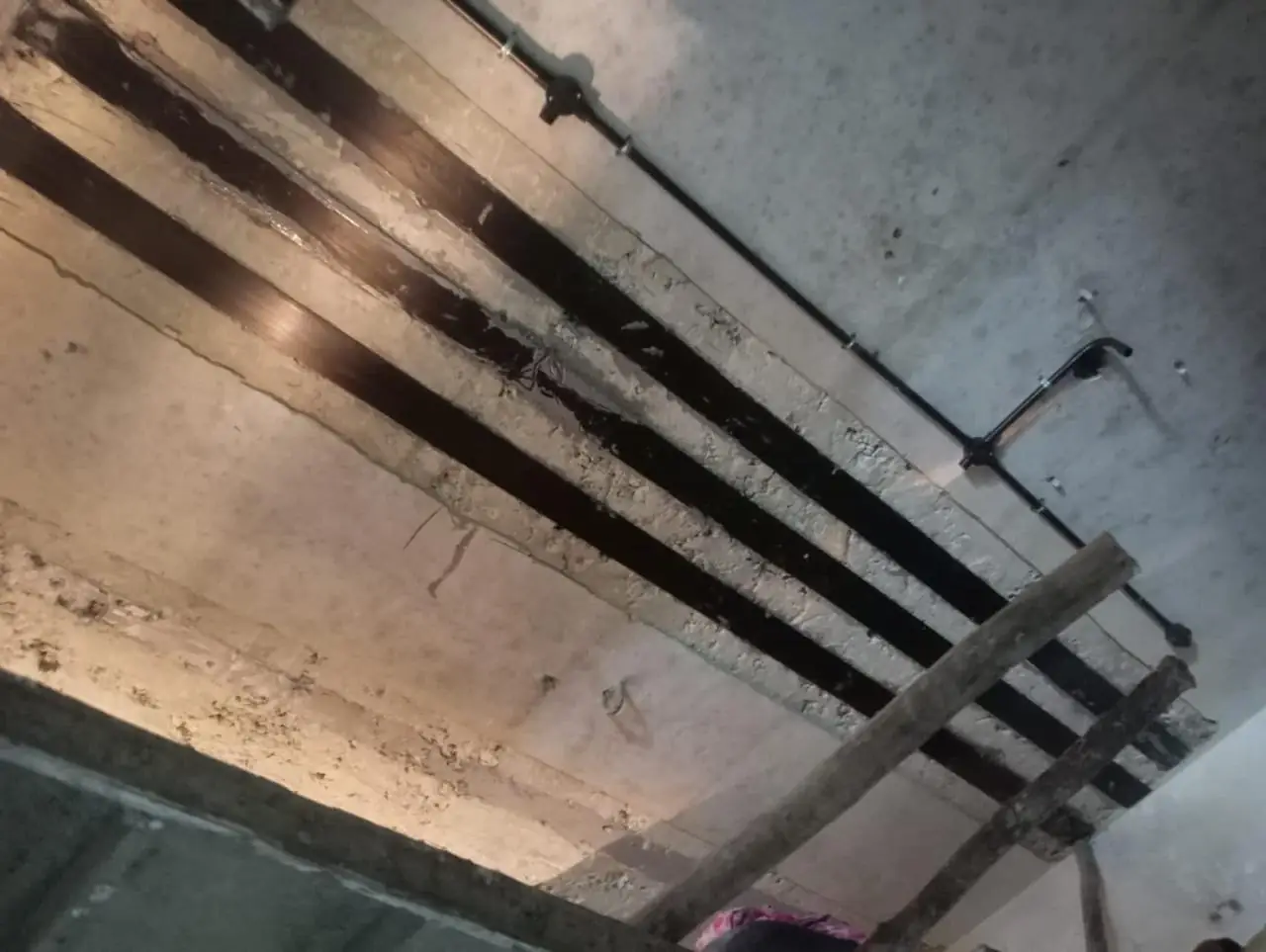
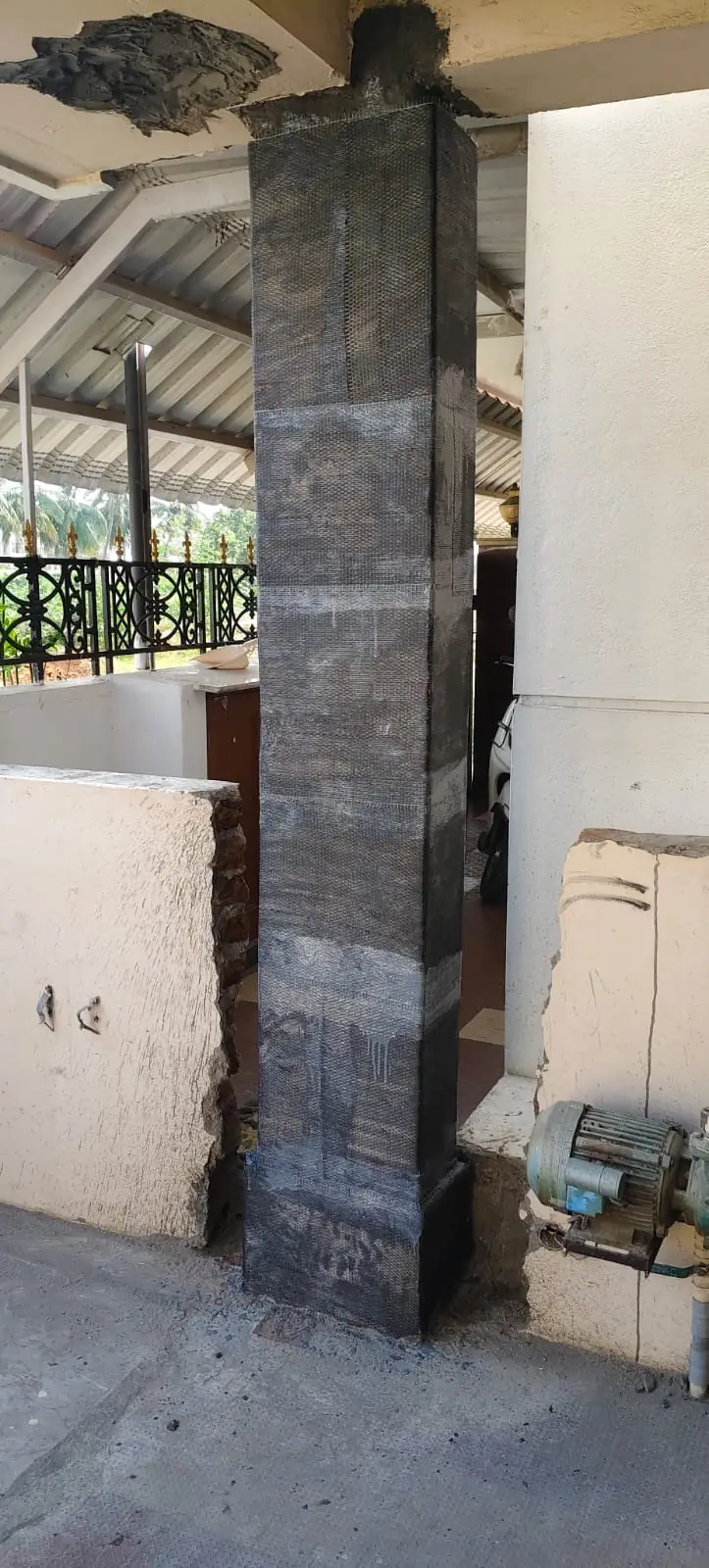
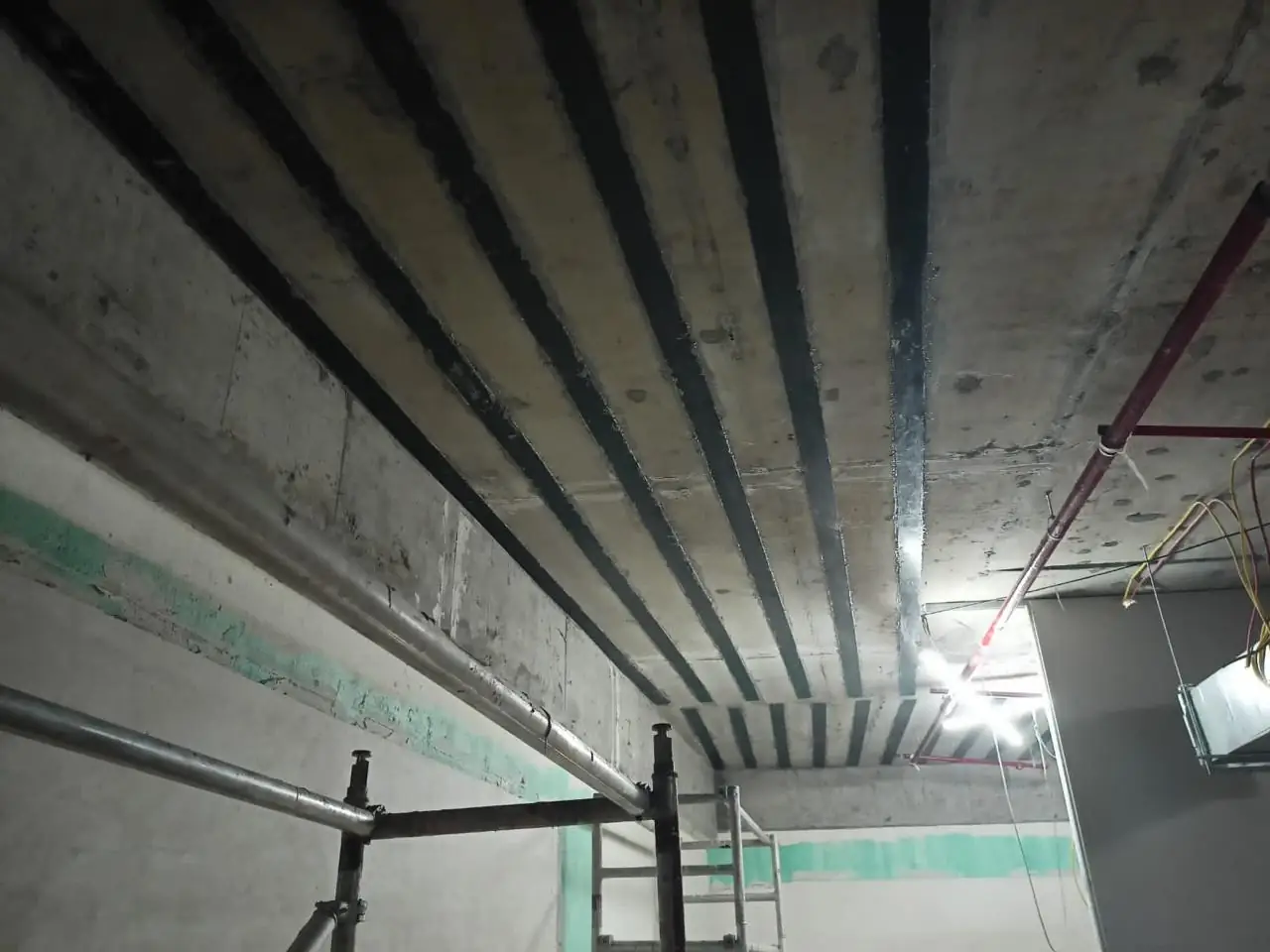
CFRP Carbon Wrapping
Carbon Fiber Reinforced Polymer (CFRP) provides an ultra-high tensile, lightweight confinement solution. Ideal for flexural strengthening, shear enhancement, and seismic retrofitting where zero increase in dead weight is essential.
Steel Jacketing & Caging
Strategic confinement using structural steel angles, battens, and plates with non-shrink epoxy grout. Restores immediate shear capacity and axial stiffness in overloaded or severely cracked columns and beams.
Micro-Concrete Section Enlargement
Increasing the effective cross-section using high-performance, self-compacting, non-shrink micro-concrete (M60+). This surgical jacket multiplies the axial load (Pu) capacity, essential for vertical floor additions and foundation upgrades.
Unlocking Vertical Potential. Engineered for Growth.
Adding floors to an existing building requires more than just casting extra columns. It requires a complete re-engineering of the load path. We audit the reserve capacity of your current foundations, beams, and columns before engineering surgical strengthening.
Learn more about our engineering procedures in our technical guide: Adding a Floor to an Existing House in Chennai.
By utilizing high-performance materials like CFRP and micro-concrete, we achieve significant axial capacity boosts with minimal footprint—preserving your valuable carpet area while maximizing real estate asset valuation.
Foundation Underpinning
Increasing footing bearing area and depth through lateral section enlargement or micropiling to safely transmit higher vertical loads into competent soil strata.
Axial Column Jacketing
Composite steel or micro-concrete jackets engineered to elevate axial capacity (Pu) of ground-floor columns for additional storeys.
Lateral Load Path Re-routing
Strategic introduction of shear walls and steel bracing to safely control seismic and wind drift in vertically expanded buildings.
The Retrofit Manifest. Eliminating execution risk.
A flawless structural repair requires a seamless bridge between the engineer's calculations and the contractor's site execution. We deliver a comprehensive technical package that eliminates guesswork, prevents material wastage, and guarantees strict IS-Code adherence.
Diagnostic Audit Report
Detailed mapping of existing conditions, localized compressive strength (fck), rebar corrosion severity, and carbonation depths backed by forensic NDT data.
GFC Retrofit Drawings
Millimeter-precise Good For Construction (GFC) drawings detailing CFRP fiber layering direction, anchor bolt layouts, micro-concrete pour sequences, and shear connector spacings.
Method Statements & SOP
Mandatory step-by-step surface preparation and chemical application protocols to guarantee 100% monolithic bonding between old concrete and new composite materials.
Tender-Ready BOQ
Exact material quantifications (CFRP laminates, structural epoxies, micro-concrete volumes). Eliminates contractor markup padding and protects against unexpected variation claims.
Engineered compounds. Not commodity materials.
Standard cement patches fail because they lack chemical bonding and tensile flexibility. We mandate the use of high-performance structural polymers, resins, and micro-concretes to ensure monolithic continuity between old structures and new reinforcements.
Structural Epoxies
Low-viscosity, high-strength chemical resins used for pressure-injecting dormant cracks, anchoring steel rebars directly into hardened concrete, and bonding CFRP composites.
Polymer Mortars
Specialized mortars infused with acrylic polymers and silica fume to eliminate shrinkage. Acts as a dense, impermeable barrier against carbonation and coastal chloride ingress.
M60+ Micro-Concrete
A free-flowing, self-compacting, non-shrink micro-concrete mix capable of achieving massive compressive strength. Used for high-load column jacketing and section enlargement.
40-Year Factory Restoration. Zero Production Loss.
The Situation: A major manufacturing facility operating with 800 active workers exhibited 6 critical distress zones, including severe column spalling, basement settlement, cantilever deflection, and extensive water ingress. The owner required certified structural safety without halting assembly lines.
The Intervention: We executed a full diagnostic sweep—integrating NDT, micro-core cutting, and electrochemical rebar analysis. Using this data, we engineered a hyper-sequenced, zone-by-zone surgical repair plan with CFRP wrapping and micro-concrete jacketing.
- Asset Age 40-Year-Old Plant
- Diagnostics Full NDT + Core Profiling
- Execution Model Phased Zone-by-Zone Repair
Field Execution. Visual Evidence.
Related Technical Guides & Insights
Adding a Floor to an Existing House in Chennai: Structural Assessment Guide
How to evaluate foundation load capacity, column strength, and soil stability before vertical construction.
Structural Stability Certificate in Chennai: Complete Engineering & Legal Guide
Mandatory regulatory compliance, CMDA standards, and inspection procedures for public and commercial buildings.
House Construction & Structural Detailing Costs in Chennai (2026 Guide)
Comprehensive breakdown of steel, cement, and structural engineering optimization to reduce building costs.
Strengthening and Repair FAQ
How long will the structural repair and strengthening last?
We do not engineer temporary patches. By utilizing aerospace-grade composite materials (CFRP), non-shrink micro-concretes, and eliminating the root cause (such as chloride ingress), our retrofitting solutions are engineered to match or exceed the remaining design life of the original structure—typically 30 to 50 years.
Do we need to vacate the building during strengthening works?
Not necessarily. For commercial, residential, and industrial assets, we frequently engineer phased, zone-by-zone execution plans. This allows your critical business operations or residents to continue safely on other floors or adjacent zones with zero to minimal disruption.
Can you strengthen a foundation without demolishing the ground floor?
Yes. Depending on soil conditions and column layout, we utilize techniques such as micro-piling, lateral footing section enlargement, and chemical compaction grouting. These procedures can often be executed from the exterior periphery or confined basement zones, preserving existing ground-floor slabs.
Can existing columns be strengthened to add extra floors?
Yes. Through Non-Destructive Testing (NDT) and 3D structural modeling, we calculate the reserve capacity and engineer custom RC column jacketing, steel caging, or CFRP confinement to safely carry the increased axial (Pu) and moment loads of additional storeys.
Do you provide structural stability certificates post-repair?
Yes. As a registered Structural Engineer in Chennai, Structural Sense India Private Limited is fully authorized to issue the official Structural Stability Certification required for your municipal CMDA/DTCP compliance, licensing, and asset insurance once the retrofit is complete.
Delay multiplies risk. Engineer the recovery.
Structural distress does not stabilize on its own; it accelerates. Connect with our registered structural engineering team to schedule a comprehensive NDT audit and secure a permanent, code-compliant recovery plan for your asset.
Beyond Strengthening: Our Core Engineering Services
Structural Audits & Diagnostics
Technical identification of building distress, wall cracks, and foundation settlement with data-backed remediation roadmaps.
Explore ServiceStability Certification (CMDA)
Registered Structural Engineer (RE) certification for schools, commercial establishments, and industrial regulatory compliance.
Explore ServiceStructural Design & GFC Drawings
Code-compliant structural design, 3D FEA stress modeling, and optimized GFC construction drawings for new developments.
Explore Service