Critical Risk
🔍 Inspect
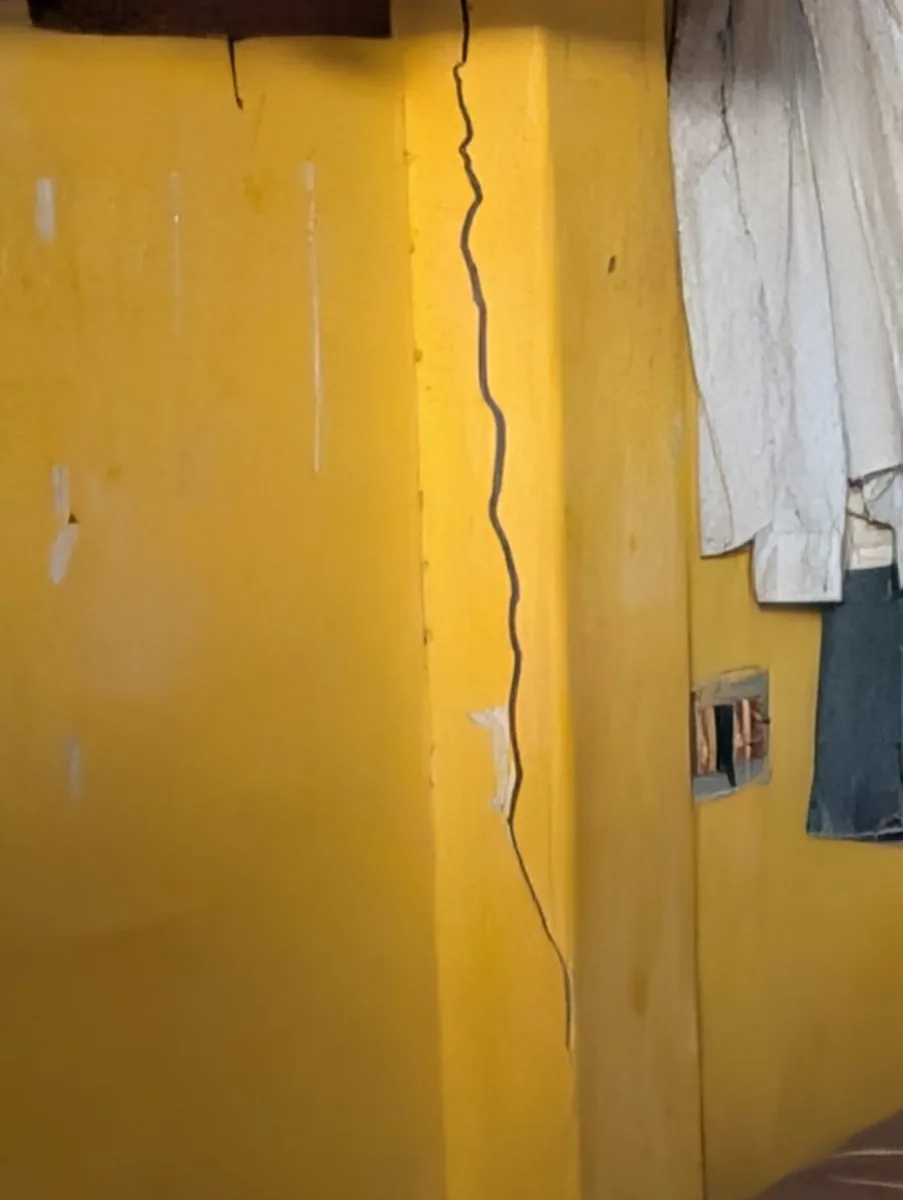
Vertical Cracks in RCC Columns
Splitting cracks along column faces indicate compressive axial overstress, foundation settlement, or stirrup corrosion. Requires urgent load assessment.
Structural Sense provides expert structural damage inspection and wall crack diagnosis across Chennai. We decode wall cracks, column distress, and foundation settlement to deliver a clear, IS-compliant engineering assessment report with precise remediation blueprints.
100% Confidential Engineering Audit • Non-Destructive First
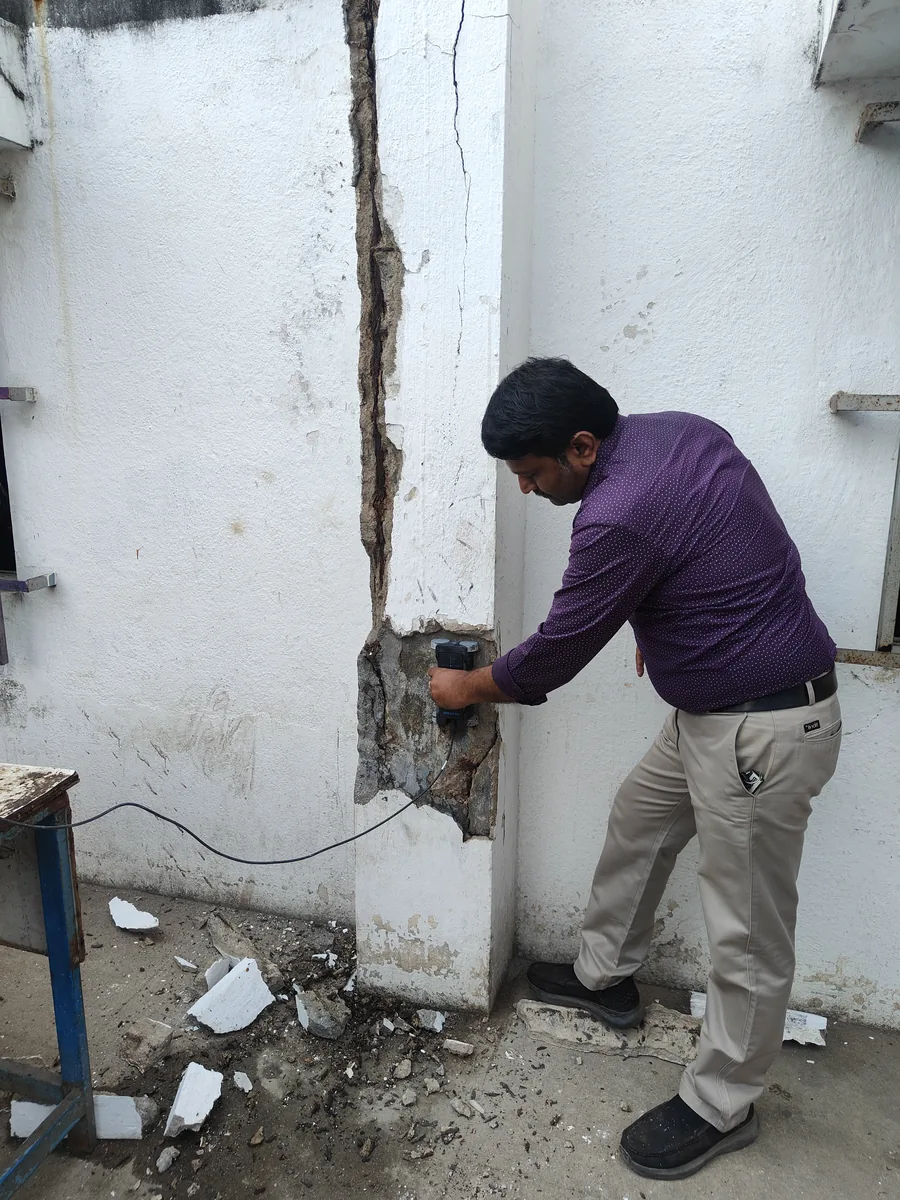
Click any symptom below to inspect high-resolution forensic defect photography, IS code severity classification, and contractor-safe remediation precautions.
Splitting cracks along column faces indicate compressive axial overstress, foundation settlement, or stirrup corrosion. Requires urgent load assessment.
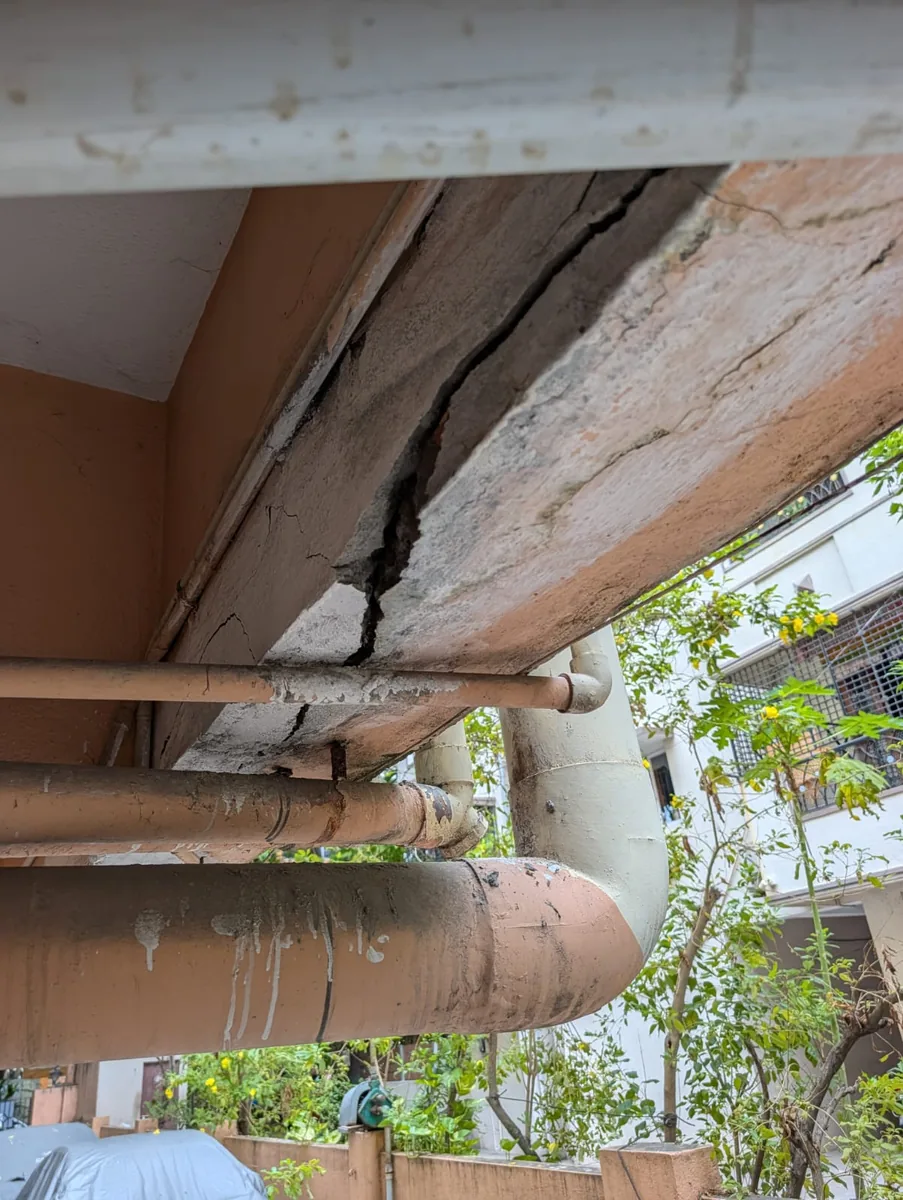
45-degree diagonal cracks near beam supports or vertical mid-span cracks indicate shear overstress or sagging moment exceeding rebar capacity.
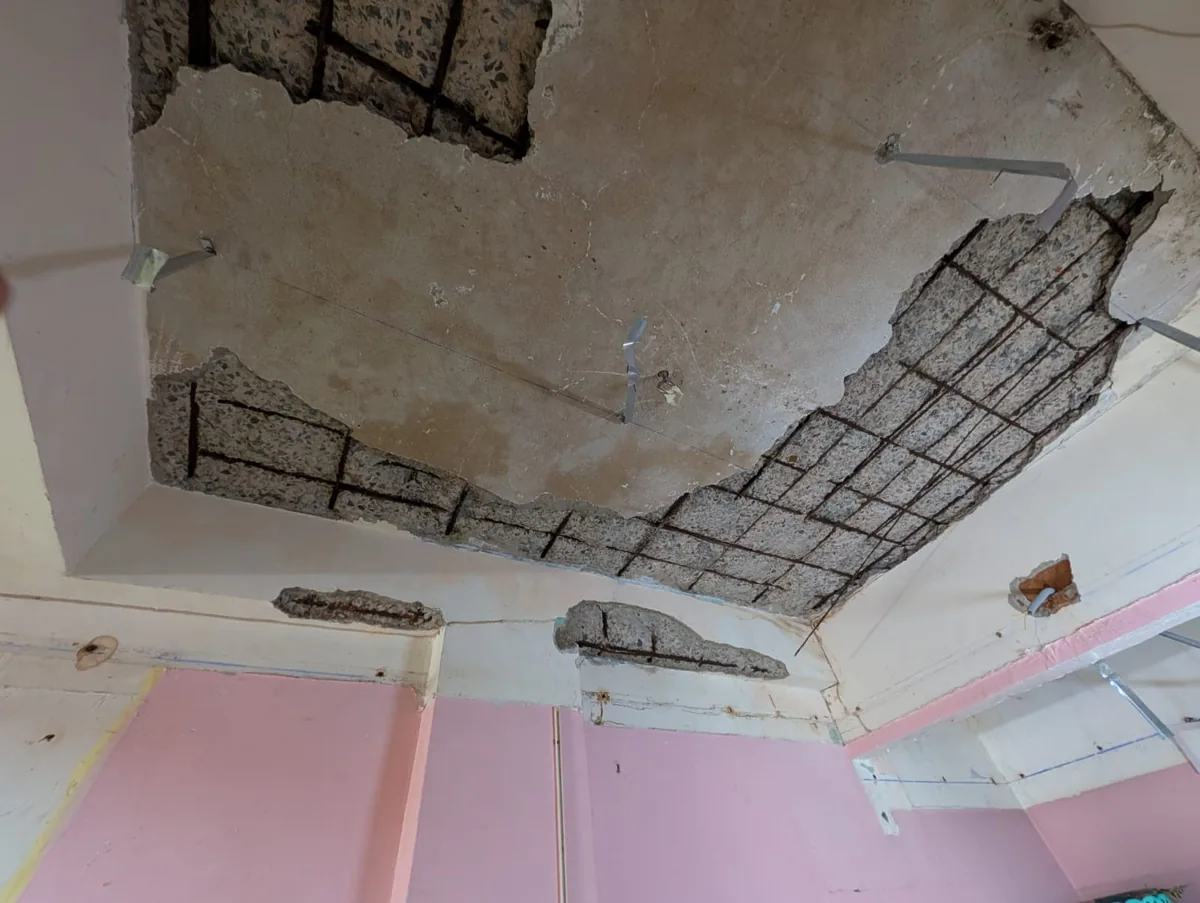
Corrosion expands embedded rebar up to 600%, bursting the concrete cover off ceilings and beams. Exposed steel bars rapidly lose load capacity.
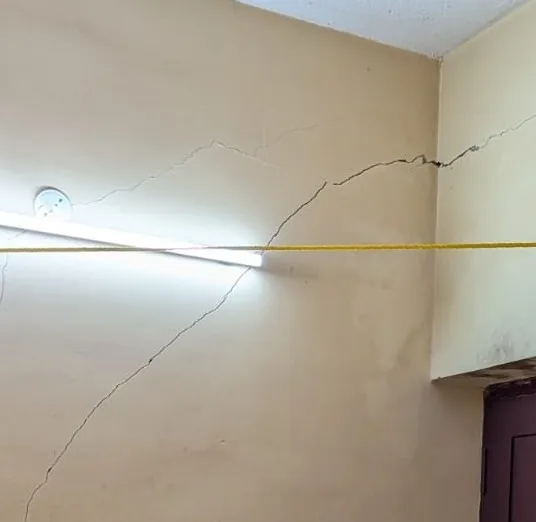
Stepped diagonal cracks traversing brick courses indicate unequal foundation settlement or lateral shear strain between structural bays.
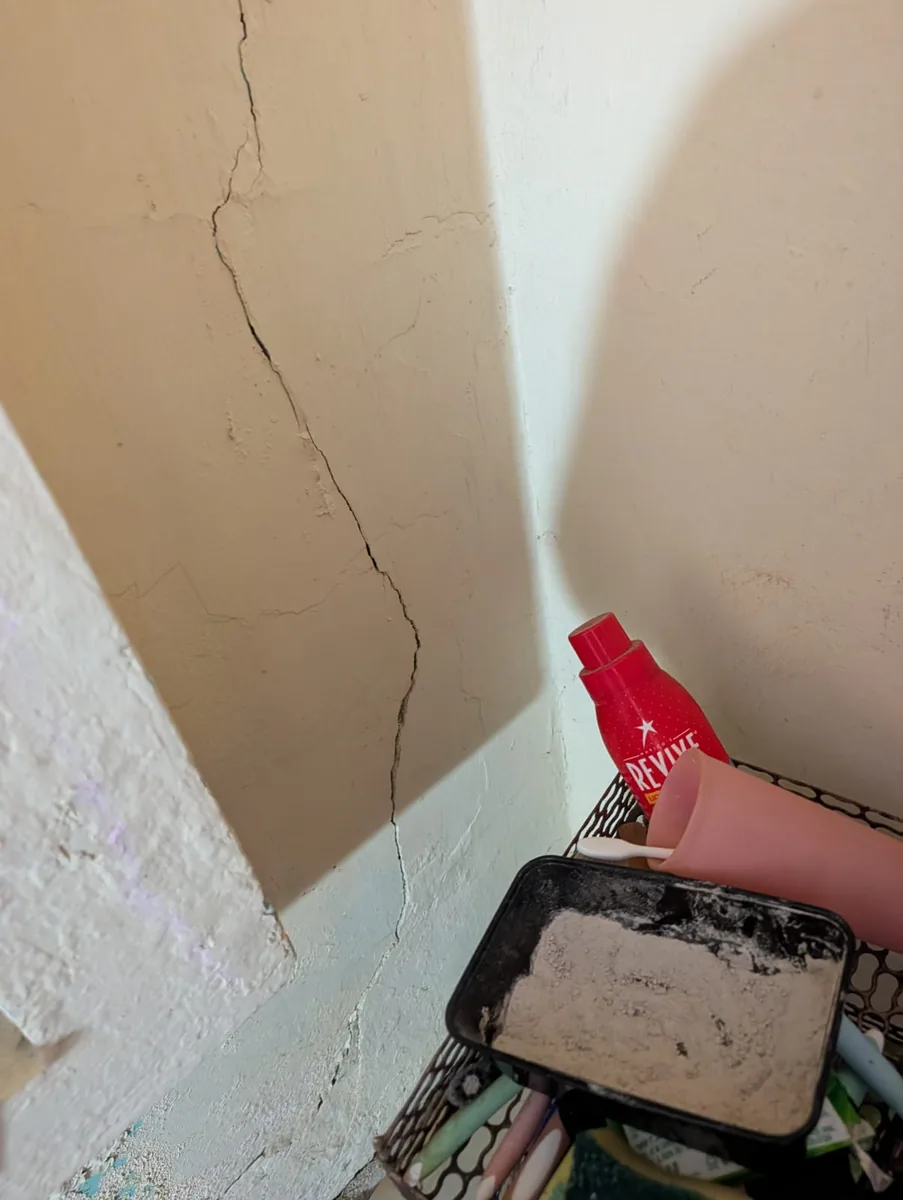
Continuous horizontal cracks at slab-beam junctions or mid-wall height reflect slab deflection, thermal expansion, or mortar bond detachment.
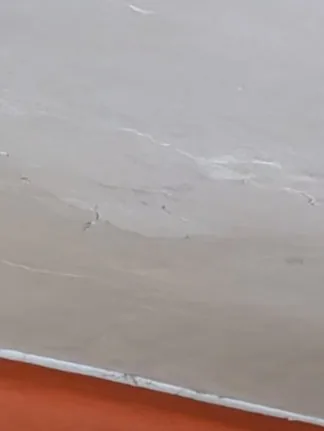
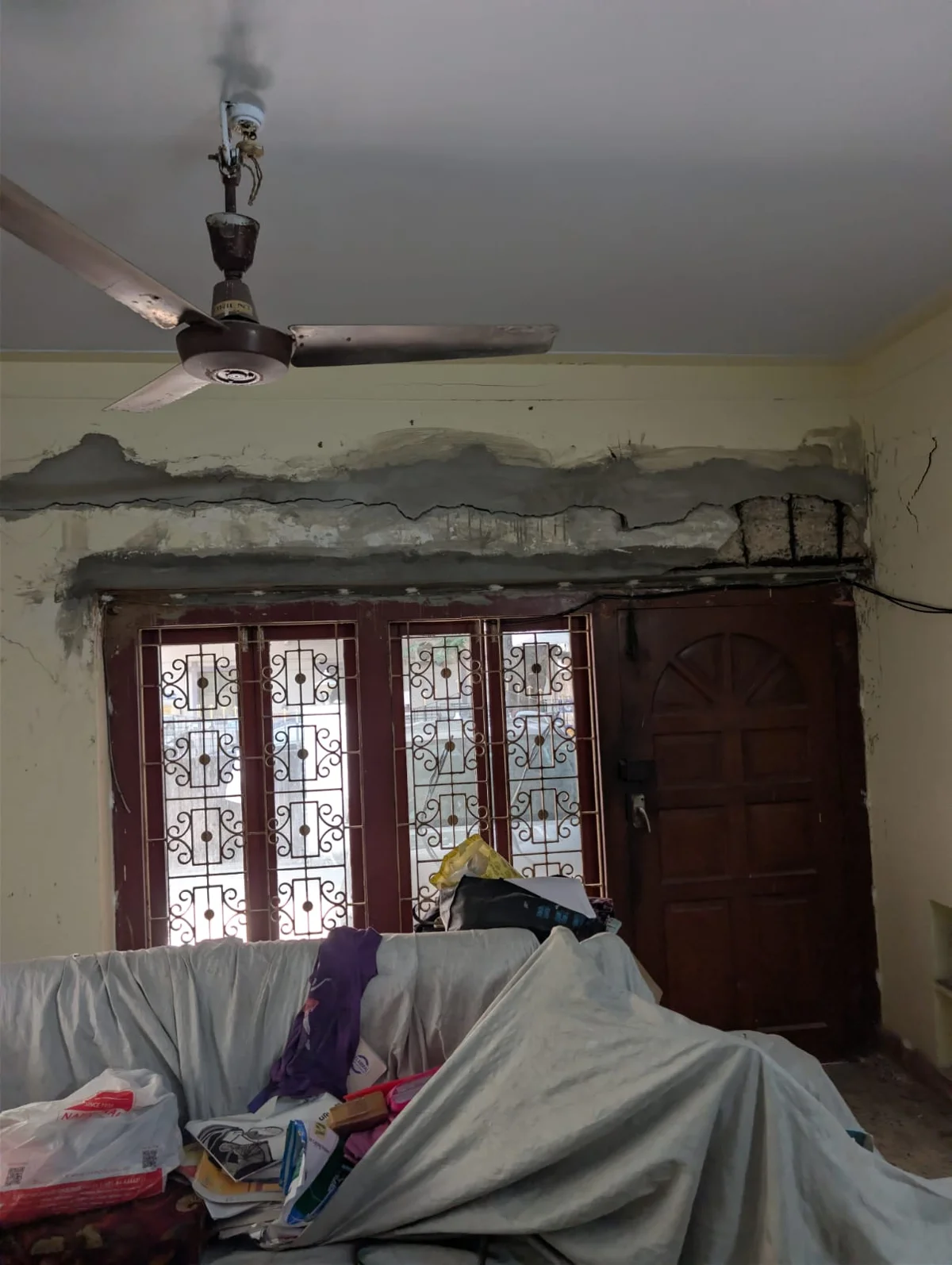
Hollow or bulging ceiling plaster indicates internal concrete delamination from persistent moisture ingress and corroding reinforcement.
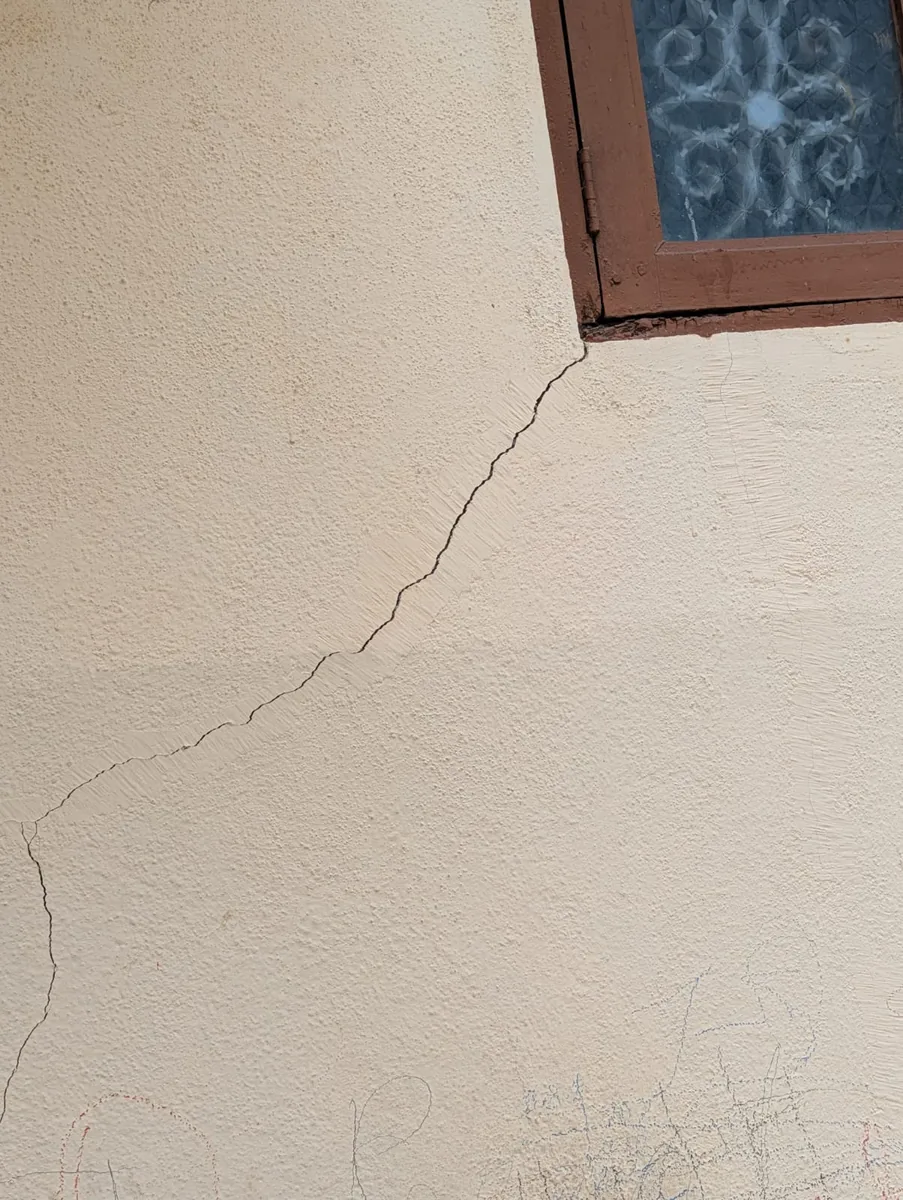
Diagonal cracks radiating outward from window and door corners reveal stress concentration and insufficient lintel bearing length.
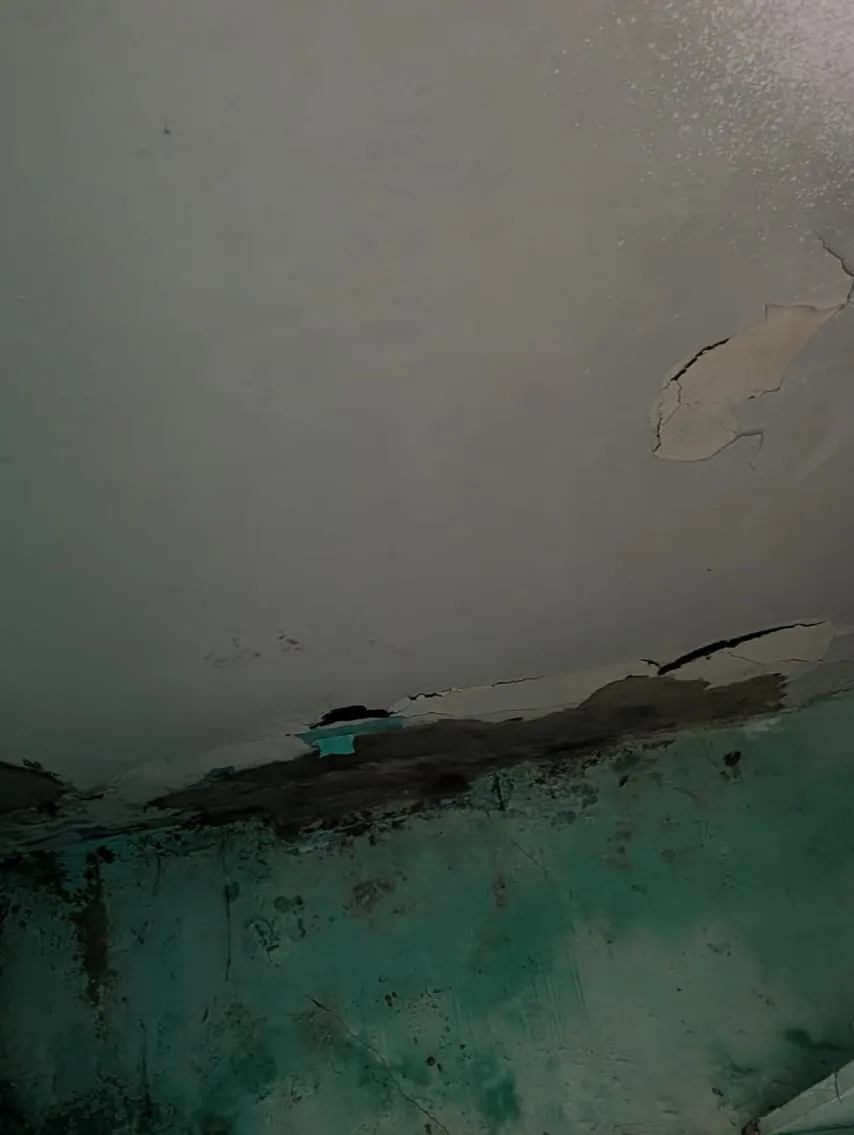
Patterned or longitudinal hairline cracks across slab undersides caused by thermal contraction, plastic shrinkage, or sustained live load overstress.
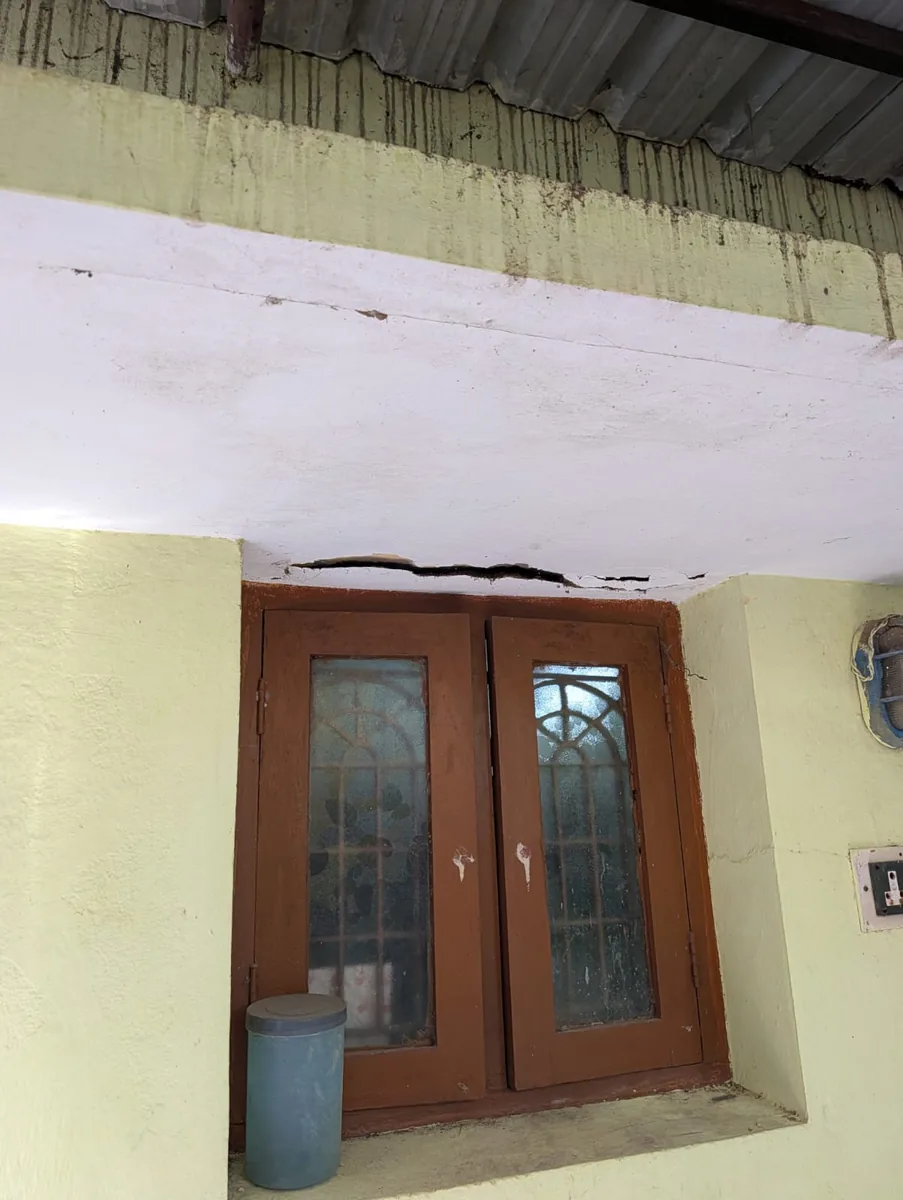
Cracks at top cantilever junctions directly threaten sudden shear detachment. Top-tension steel is vulnerable to rainwater penetration and corrosion.
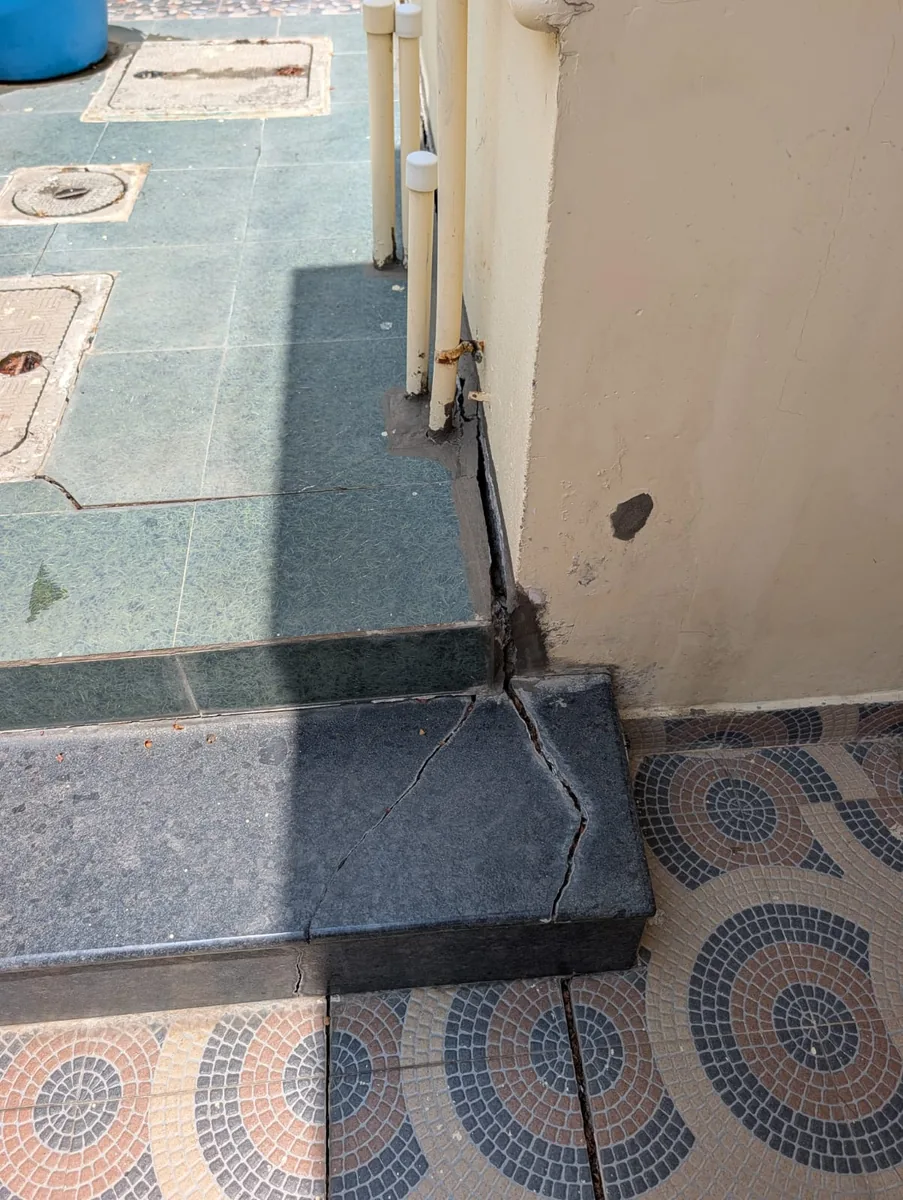
Hollow, cracked, or depressed floor tiles indicate wash-away of subsoil backfill, leaking underground sewage pipes, or foundation consolidation.
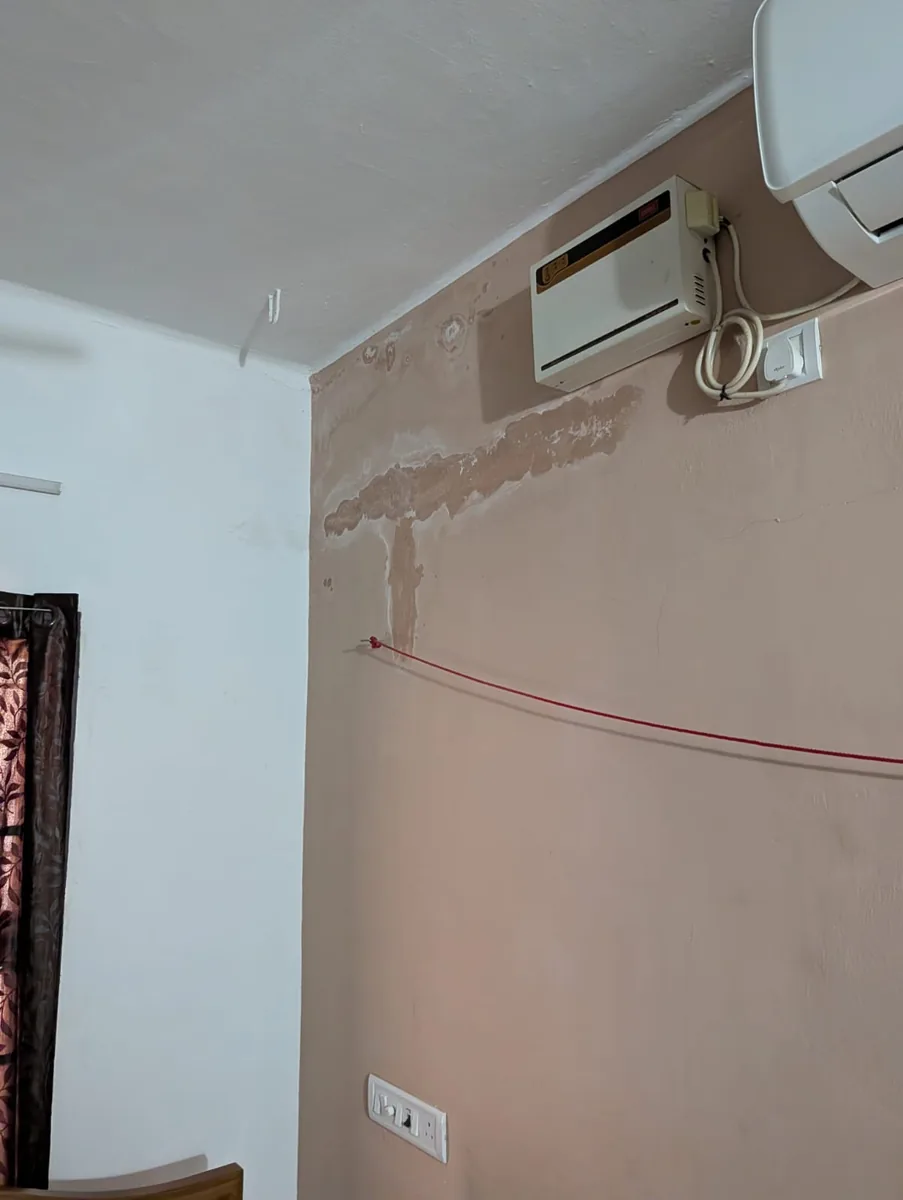
Persistent moisture rising through plinth beams or leaking from sunken toilet slabs accelerates concrete carbonation and concealed steel rebar rusting.
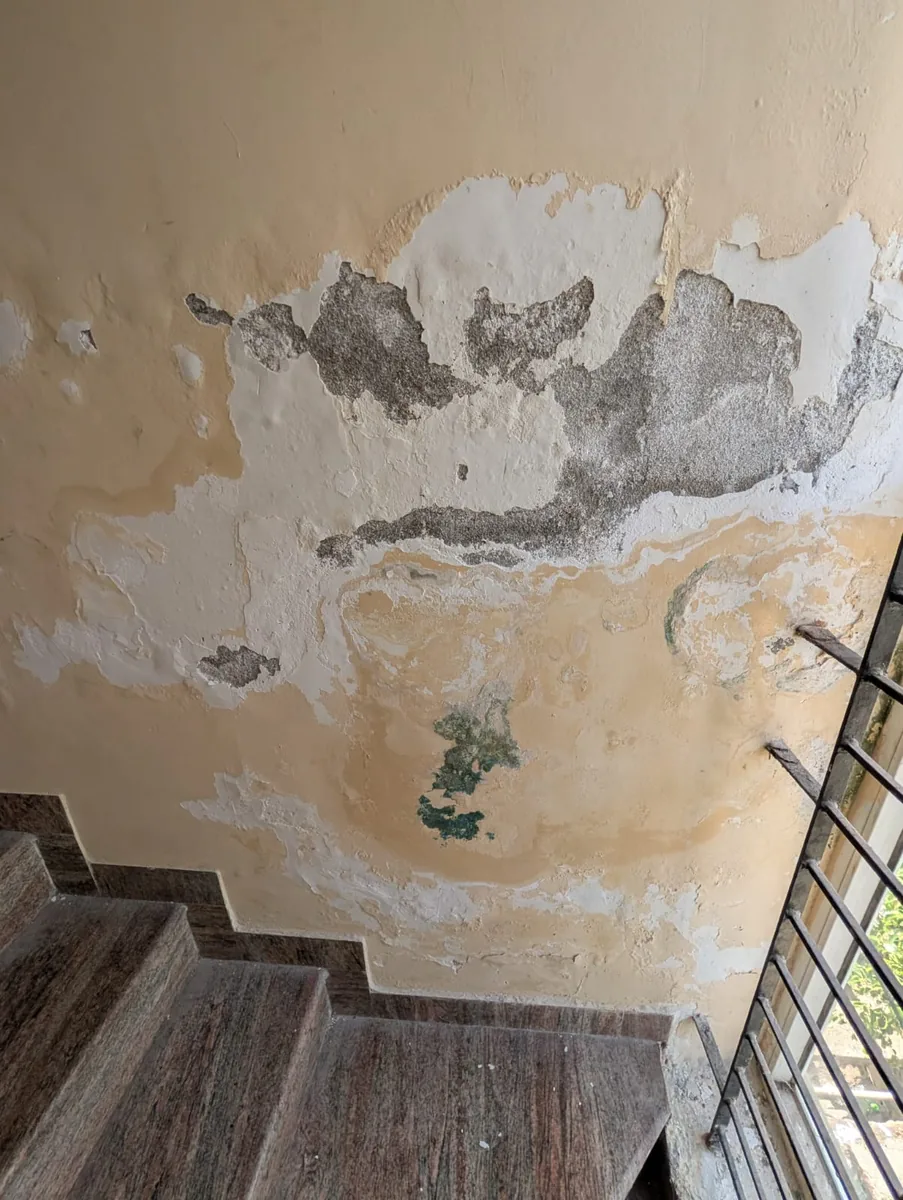
White crystalline salt leaching (efflorescence) destroys mortar bonds and disintegrates bricks, signaling continuous groundwater capillary draw.
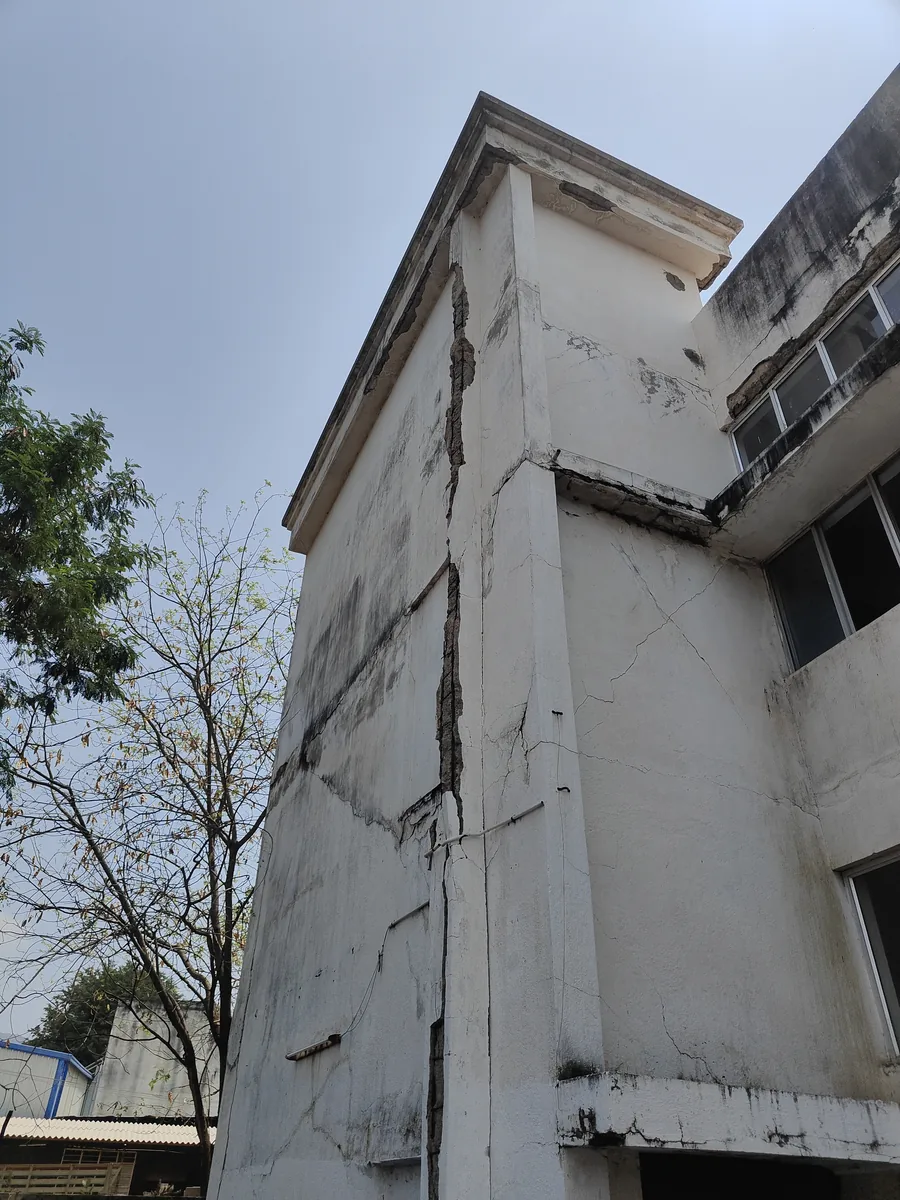
Buildings exposed to Chennai's coastal humidity, monsoon cycles, and saline air require periodic non-destructive structural condition audits.
Every crack tells an engineering story. Our CMDA registered structural engineers categorize structural damage and crack patterns using the strict criteria defined by the Bureau of Indian Standards (BIS), including IS 456:2000 (Plain and Reinforced Concrete), IS 13935:2009 (Seismic Evaluation and Repair), and IS 1893.
| Crack Classification | Width Threshold (IS 456) | Root Cause & Physical Mechanism | Structural Risk Level | Engineered Remediation |
|---|---|---|---|---|
| Hairline Shrinkage Fissures | < 0.3 mm (Internal) < 0.2 mm (Coastal) | Rapid evaporation of moisture during plaster curing; minor temperature expansion. | Non-Structural | Elastomeric surface sealants; aesthetic re-plastering. |
| Diagonal Shear Cracks | 1.5 mm to 4.0 mm | Differential footing settlement, expansive clay subsoil rotation, or inadequate beam shear links. | Severe / Structural | Foundation underpinning, high-strength epoxy pressure injection & carbon fiber wrapping. |
| Horizontal Wall & Slab Cracks | 1.0 mm to 3.5 mm | Slab deflection bending moments, RCC frame expansion joint failure, or load-bearing wall overload. | Moderate to High | Helical stitch bars, micro-concrete jacketing & structural load redistribution. |
| Column Spalling & Delamination | > 3.0 mm + Concrete Fallout | Chloride-induced electrochemical rebar corrosion expanding steel volume up to 600%. | Critical / Urgent | Rust conversion, zinc-rich rebar coating, polymer modified mortar & reinforced column jacket. |
In coastal areas (Adyar, Mylapore, Besant Nagar, ECR), sea air carries chlorides into porous concrete, corroding embedded steel and causing ceiling concrete chunks to fall.
Clay subgrades in Velachery, Madipakkam, and Perumbakkam shrink unevenly across seasons, generating severe 45-degree diagonal shear cracks along ground floor walls.
For deep distress, our engineers deploy Digital Rebound Hammers (IS 13311) and Ultrasonic Pulse Velocity (UPV) to measure concrete strength without breaking members.
Describe your building's condition and share photos on WhatsApp. We review your symptoms and advise if an on-site audit is needed.
We lock in a site visit schedule within 48 hours. You will know exactly when the engineer arrives at your property.
A detailed visual survey. We map crack widths, evaluate load paths, and identify the true source of structural distress.
If visual checks are insufficient, we deploy rebound hammer and ultrasonic tests without breaking your structure.
Within days, you receive a clear, IS-Code compliant assessment detailing root causes and precise repair blueprints.
Cracks appeared after rain or nearby construction and you need verified structural safety advice.
Managing an aging industrial property needing independent safety audits and compliance verification.
Purchasing an existing building and requiring an unbiased structural evaluation before closing.
Requiring certified structural assessment before handover or prior to vertical floor addition.
Following our visit, you receive an exhaustive Site Assessment Report. We translate visual symptoms into clear engineering directives, giving you a definitive understanding of building safety and exact remediation steps.
Every building inspection conducted by Structural Sense culminates in an exhaustive, IS-compliant technical report. We translate visible cracks, dampness, and concrete spalling into definitive engineering directives, root causes, and contractor-ready repair specifications.
Building parameters, structural system, age, and forensic inspection boundary definition.
Defect severity overview, urgency stratification, and strategic engineering remediation direction.
Location-by-location defect inventory with high-resolution photographic mapping and risk priority tags.
Code-compliant repair directives, material specifications, and Er. S. Pughalmathi's CMDA credentials.
Every crack, damp spot, spalling concrete, or deflection point is logged with exact room/member location and calibrated crack width.
We pinpoint whether distress stems from plumbing leaks, soil settlement, thermal movement, concrete carbonation, or rebar corrosion.
Clear risk prioritization under IS 456: Immediate Attention Required, Recommended for Early Rectification, or Periodic Monitoring.
Step-by-step repair methodology, polymer-modified mortars, epoxy injection, and waterproofing specs that contractors must follow.
Download complete, real-world reports to examine the engineering rigor, observation depth, and photographic evidence we deliver.
B+G+9 RCC building condition audit covering 40 residential flats, basement retaining walls, drop beam delamination, GI pipe leaks, and 65 numbered engineering observations.
Forensic audit of ground floor soil settlement, sunken flooring cracks, septic tank water seepage, foundation boundary distress, and plinth stabilization methodology.
Confidentiality Notice: Client names, apartment numbers, and precise plot details have been anonymized. All engineering observations, defect logs, and technical recommendations are 100% authentic.
Explore comprehensive diagnostic findings, root-cause analyses, and engineered remediation plans from actual Chennai site audits.
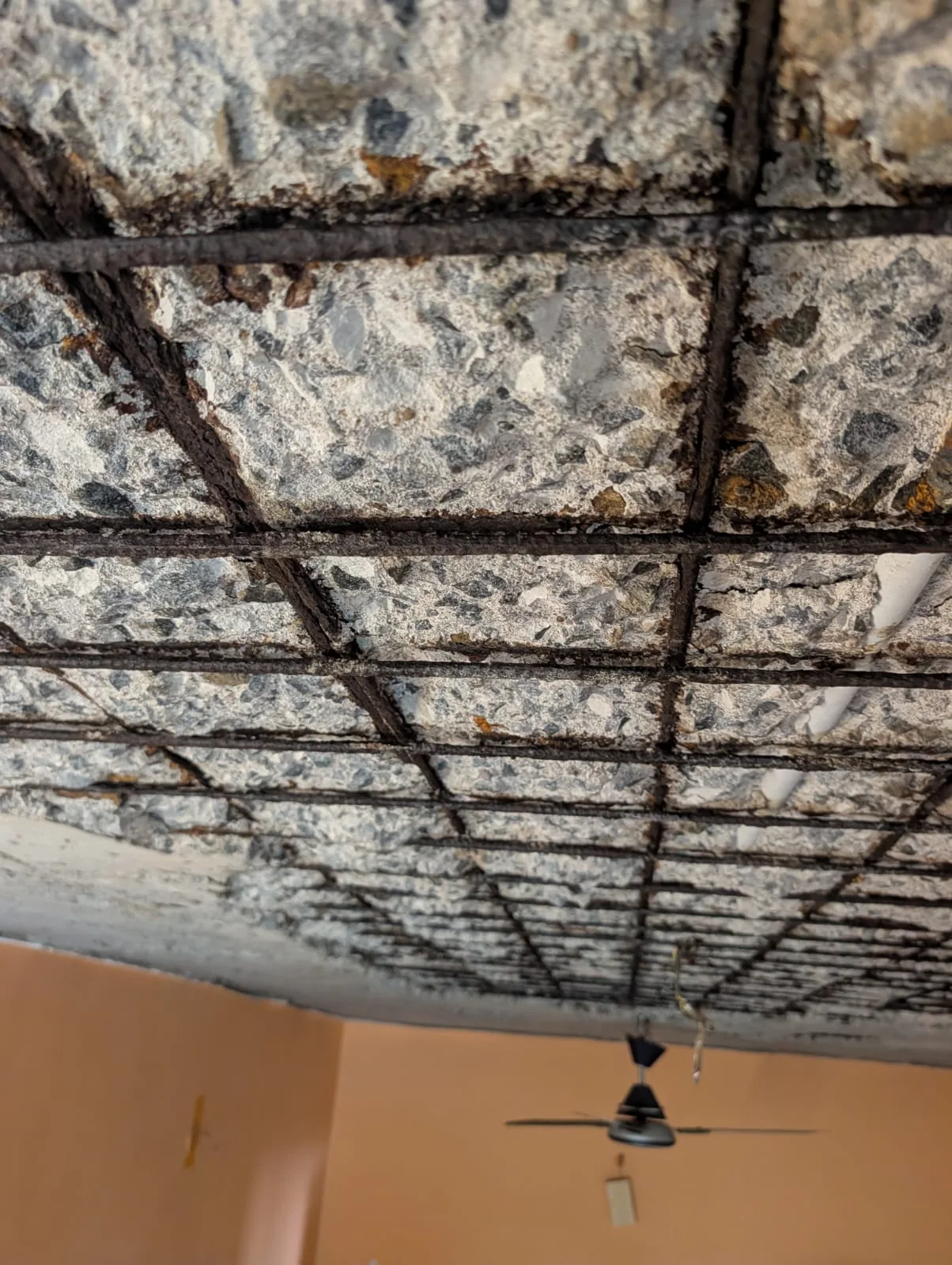
Comprehensive diagnostic mapping of severe dampness and hollow plaster across multiple residential flats.
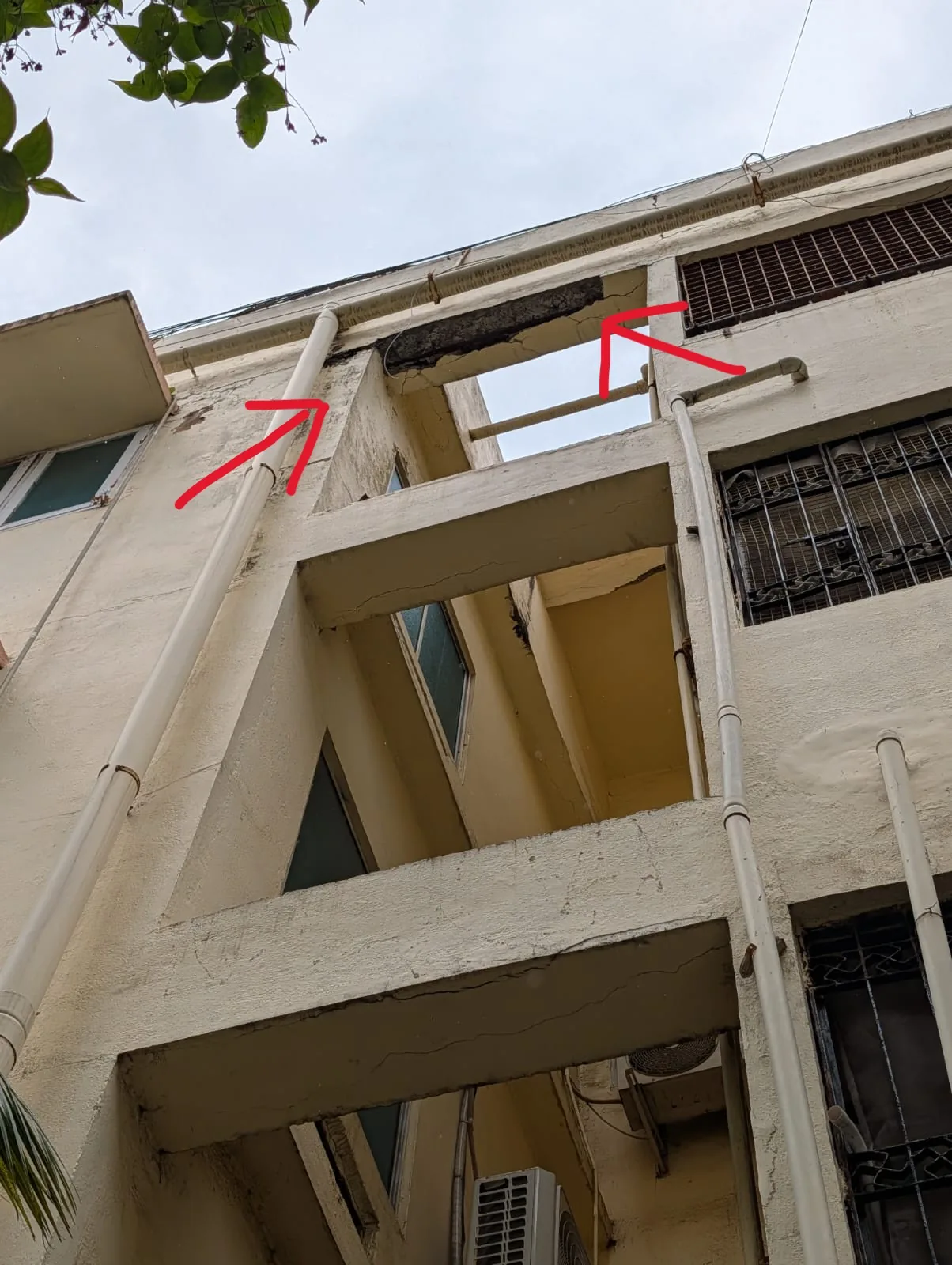
Forensic investigation of chloride-induced reinforcement corrosion and emergency structural reinstatement.
Dynamic structural vibration measurement and engineered structural steel channel stiffening protocol.
Professional engineering fees structure based on building footprint.
A client was purchasing a 20-year-old commercial property in Chennai and needed an independent safety evaluation before closing.
Our visual diagnostic revealed painted-over cracks and concealed water leakage actively corroding embedded reinforcement rebars.
Armed with our repair cost roadmap, the client successfully renegotiated the purchase price downward, saving significantly more than our inspection fee.
You saved my money. The seller insisted the building was perfect, but your report gave me the exact leverage and proof I needed.
Chennai, Tamil Nadu
Clear answers before you book your assessment.
Horizontal cracks in walls occur due to soil pressure, foundation movement, or beam shear stress. Cracks wider than 1.5 mm or visible wall bowing require prompt engineering review to prevent wall displacement.
Under IS 456:2000 (Clause 35.3.2), crack widths must remain below 0.3 mm indoors. Near Chennai's coast, the limit is strictly 0.2 mm or less to prevent saline air from corroding internal steel rebars.
Plaster cracks are shallow surface lines (under 0.5 mm) limited to paint. Settlement cracks run diagonally at 45-degree angles, exceed 1.5 mm, penetrate masonry, and cause door or window frames to jam.
Chennai's sea air carries salt deep into concrete pores. Rusting steel expands up to 6 times its original volume, generating internal pressure that cracks concrete and causes chunks to fall from ceilings.
Yes. When diagnosed early, distressed columns and beams can be restored using high-strength epoxy injection, Carbon Fiber (CFRP) wrapping, and reinforced micro-concrete jacketing.
Cosmetic cracks are superficial hairline marks under 1 mm in plaster. Structural cracks exceed 2 mm, run horizontally or diagonally near openings, and indicate foundation movement or heavy loads.
A standard residential assessment takes 2 to 4 hours on site. Commercial properties may require a full day. You receive your official engineering report within 3 to 5 business days.
No. Initial diagnostic assessments are 100% non-destructive and visual. Any core tests or chipping are only proposed if strictly needed, with your prior written approval.
Yes. You receive an official, IS-compliant Site Assessment Report detailing defect causes and repair specifications so contractors can execute the work accurately.
Yes. We inspect buildings across Tamil Nadu. Standard travel mobilization charges apply outside the Chennai metropolitan zone.
A visual assessment analyzes surface distress and crack patterns to find root causes. NDT testing uses digital rebound hammers and ultrasonic scanners (UPV) to check internal concrete strength without breaking anything.