When Concrete Falls: Cracked Beams in a 35-Year-Old Adyar Apartment Building
The Incident That Made Inspection Unavoidable
A heavy chunk of concrete detached from a cantilever beam soffit and crashed onto a parked car in the building compound below. While no injuries occurred, the residents of this 35-year-old apartment building in Adyar, Chennai recognized that falling concrete represents an immediate public safety emergency.
When concrete spalls and falls freely from elevated beams, it confirms that subsurface deterioration has progressed far beyond hairline cosmetic cracking. The internal steel is actively delaminating from the concrete matrix, directly threatening the load-carrying capacity of the frame.
Structural Sense was commissioned to execute an urgent forensic structural damage assessment to establish the root causes, quantify structural capacity loss, and provide a code-compliant remediation specification.
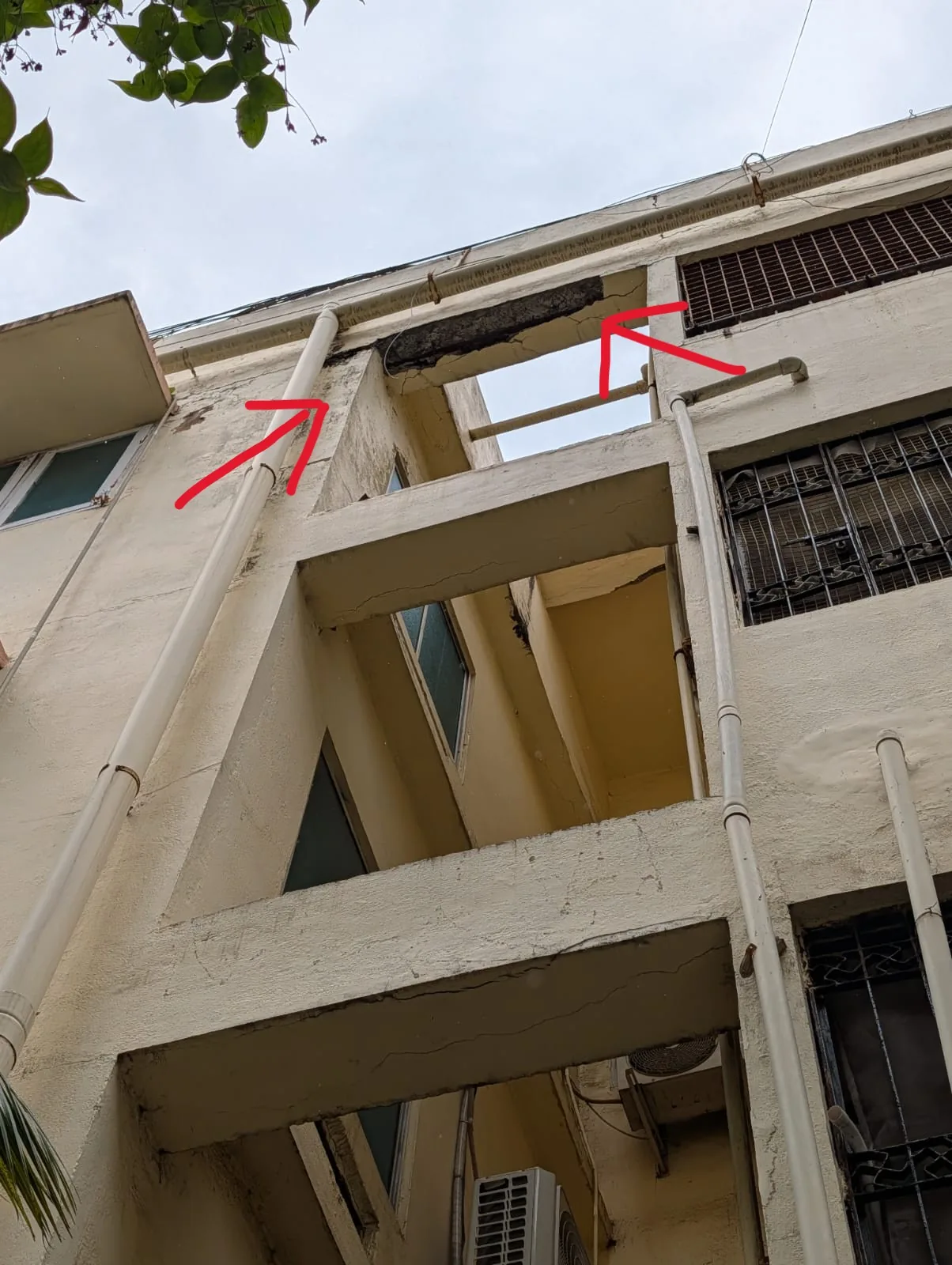
The Source: Beams Compromised by 35 Years of Moisture
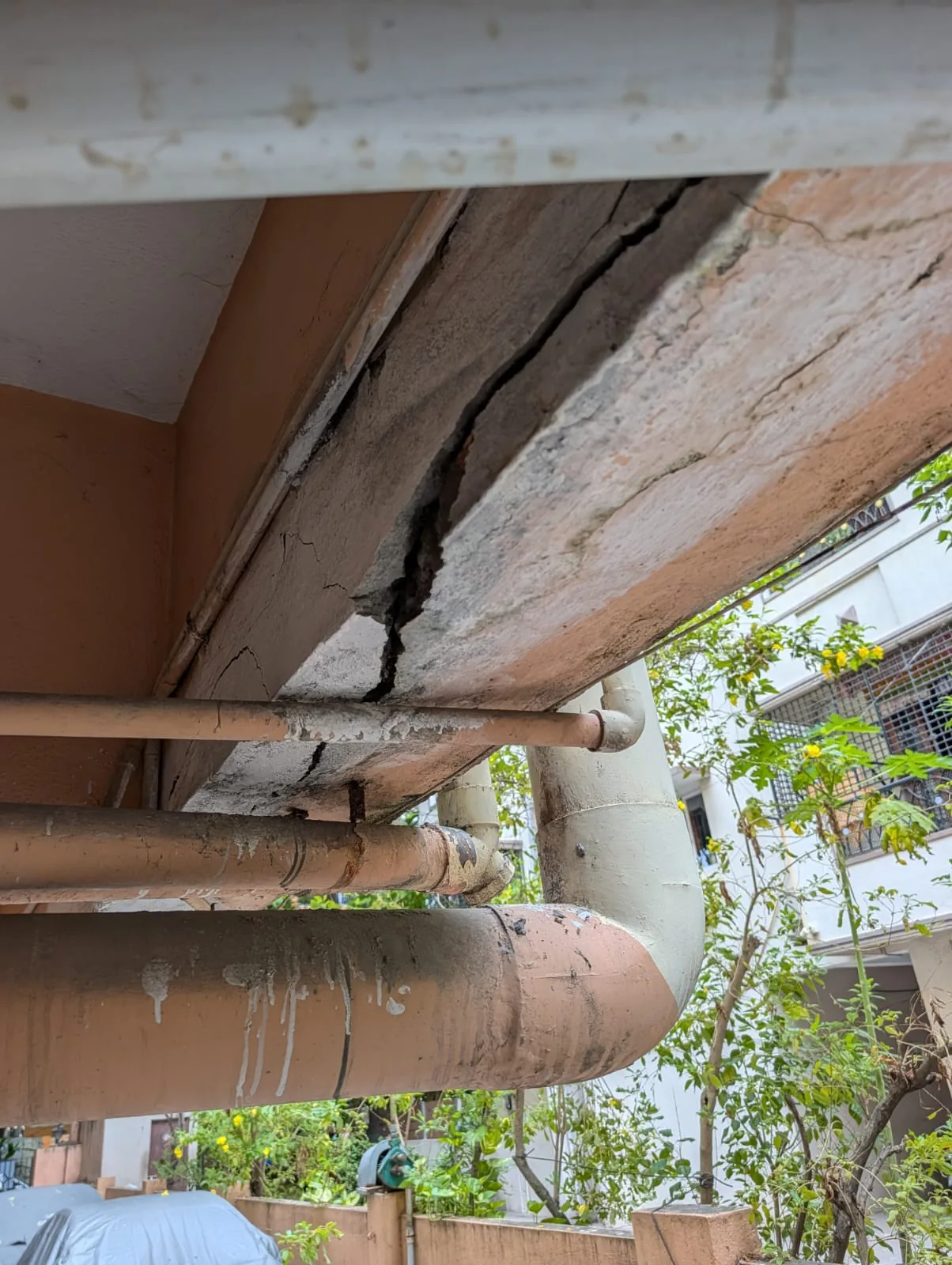
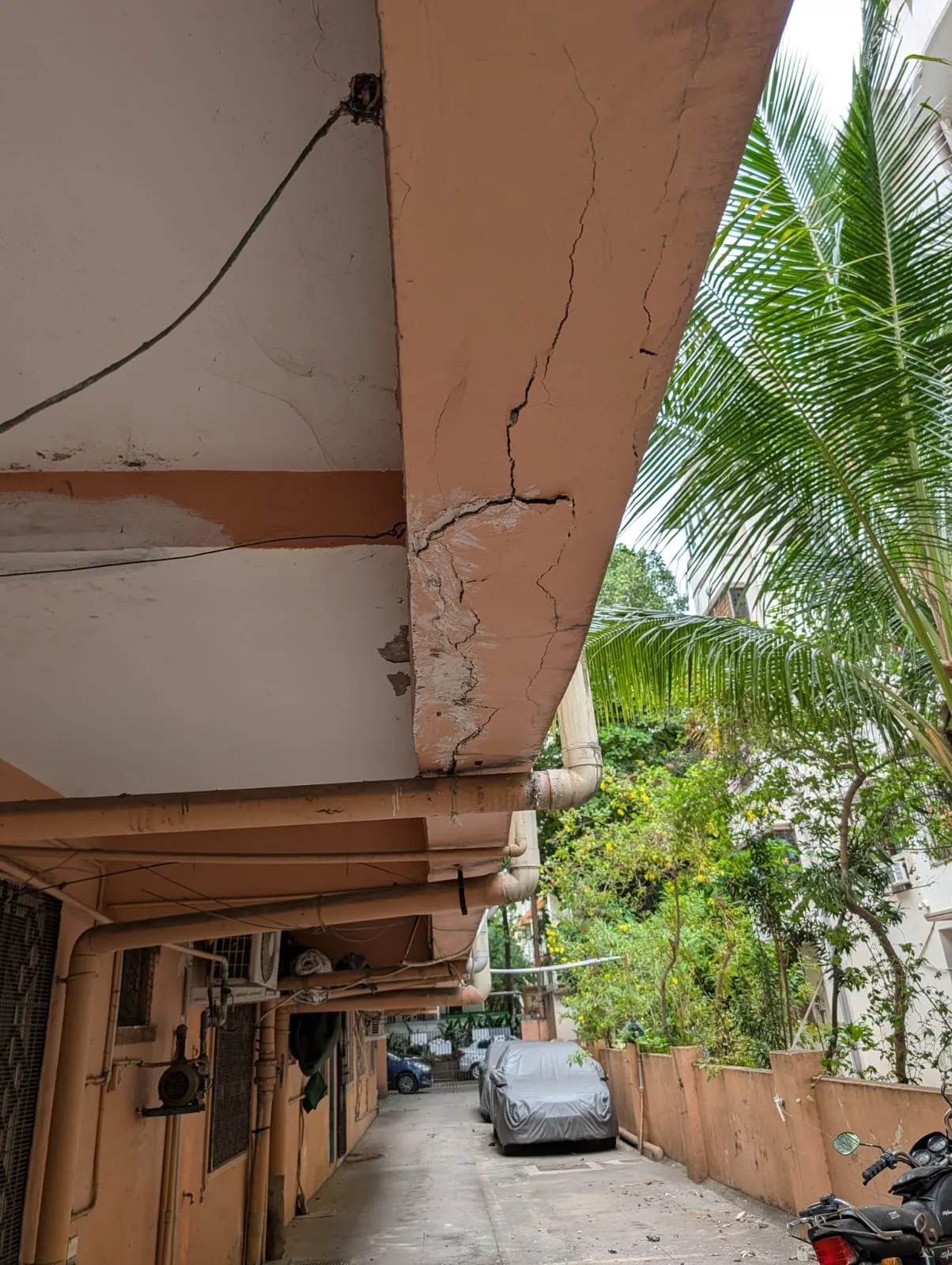
Our forensic engineering investigation located the primary failure zones: cantilever beams directly beneath upper-floor toilet slabs and the overhead water tank base. Structural cracks exceeding 5 mm in width had opened along the tension soffits, with large sections of concrete cover completely broken away.
In concrete engineering under IS 456:2000, cracks exceeding 0.3 mm allow direct ingress of moisture, airborne chlorides, and oxygen. In Adyar's saline coastal atmosphere, three decades of unstopped water percolation from leaking bathroom plumbing and tank overflows had continuously fed an aggressive electrochemical corrosion cell.
As the steel rebar oxidized, the expanding iron oxide generated internal tensile stresses far exceeding concrete's tensile rupture limit (~3 MPa), exploding the concrete cover outwards and leaving the tensile steel exposed to rapid atmospheric decay.
Recommended Immediate-Action Remediation Sequence
Patching spalled beams with cosmetic plaster or ordinary cement mortar without treating the corroding rebar is extremely hazardous because active rust will continue beneath the patch, causing repeated collapse. Structural Sense specified a strict, 4-stage engineering sequence:
Substrate Preparation & Anti-Corrosion Rebar Passivation
Mechanically sound and remove all hollow, delaminated concrete until sound parent concrete is reached. Clean exposed rebar to bare metal (SA 2.5 standard) using mechanical wire brush / sandblasting, and apply a two-component zinc-rich epoxy anti-corrosive primer immediately.
Structural Profile Restoration via Polymer-Modified Mortar (PMM)
Rebuild the missing structural cover utilizing high-performance, non-shrink Polymer-Modified Mortar (PMM) reinforced with alkali-resistant glass fiber mesh. Inject deep ceiling fractures with low-viscosity epoxy structural grouts.
Moisture Source Elimination via Scientific Waterproofing
Permanently terminate active percolation from toilet sunken slabs and overhead tanks using scientific waterproofing in Chennai. Repairing structural concrete without eliminating moisture catalysts guarantees recurrence.
Advanced Carbon Fiber (CFRP) Strengthening
For beams where rebar diameter had suffered section loss exceeding 15%, evaluate and deploy CFRP composite wrapping. High-tensile carbon-fiber fabrics bond to tension faces, restoring full design load capacity without adding dead weight.
Audit Findings: Defect Severity & Action Prioritization
| Structural Location | Observed Forensic Defect | Urgency Level | Recommended Engineering Remedy |
|---|---|---|---|
| Toilet Cantilever Beams | 5mm Fractures, Spalling & Corroded Rebar | Immediate Action | Zinc Passivation + PMM Mortar + CFRP Retrofit |
| Overhead Water Tank Base | Concrete Delamination & Rust Staining | Immediate Action | Hydro-Sealing + Structural Section Rebuilding |
| Terrace Roof Slab | Failed Membrane & Rebar Corrosion | High Priority | PMM Patching + Multi-Layer Terrace Waterproofing |
| Exterior Masonry Walls | Thermal & Shrinkage Cracking | Standard Action | V-Groove Flexible Polymer Grout Sealing |
| Internal Bathroom Wet Areas | Sunken Slab Seepage Across All Flats | Standard Action | Scientific Plumbing Waterproofing Protocol |
Comprehensive Structural Defect Mapping
Beyond the immediate beam hazards, our structural audit documented thermal cracking across exterior facades caused by Chennai's extreme coastal heat cycles, advanced terrace slab spalling, and unarrested toilet leakage throughout the vertical stacks.
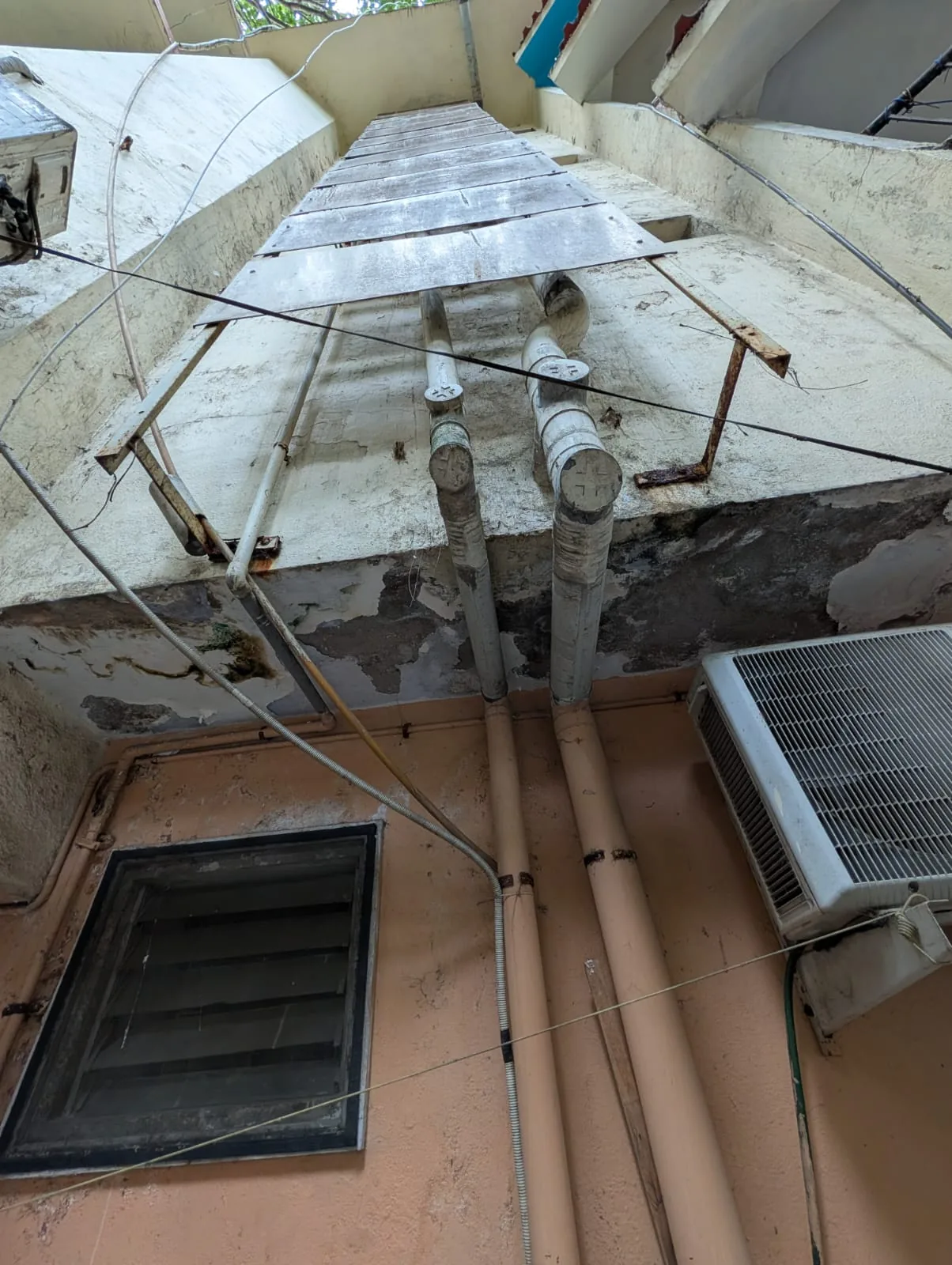
Where internal voids were suspected, we recommended non-destructive NDT testing services in Chennai to scan the remaining core concrete homogeneity. The complete engineering roadmap established a clear principle: stop the water source first, rebuild structural integrity second, and apply weather-protective barriers third.
Concrete Does Not Fall Without Warning. Read the Signs Early.
If your building shows brown rust weeping, hollow sounds, or ceiling cracks, do not wait for concrete to fall. Schedule a certified structural damage inspection.
Frequently Asked Questions on Concrete Spalling
Explore Related Forensic Case Studies & Engineering Guides
Building Vibration & Severe Beam Deflection Fix
Forensic NDT investigation and CFRP composite retrofitting specifications for a severe floor vibration issue.
Settlement Cracks & Expansive Clay Soil Distress
Diagnosing deep 45-degree diagonal masonry wall cracks caused by fluctuating groundwater and clay movement.
Beam-Column Junction Shear Crack Diagnosis
Structural pressure grouting and carbon-fiber wrapping specifications for heavy shear cracks at critical frame joints.
Ceiling Cracks & Roof Safety Guide for Homeowners
How to distinguish between superficial paint crazing and hazardous structural slab deflection cracks.
Concrete NDT Testing: Rebound Hammer & UPV Explained
Complete guide to measuring in-situ compressive strength, voids, and rebar corrosion without destruction.
CMDA Structural Stability Certificate (Form B & C)
Understanding legal safety audits, building fitness criteria, and engineer certification under TN Public Buildings Act.