Ceiling Concrete Falling? Root Cause & Repair Guide
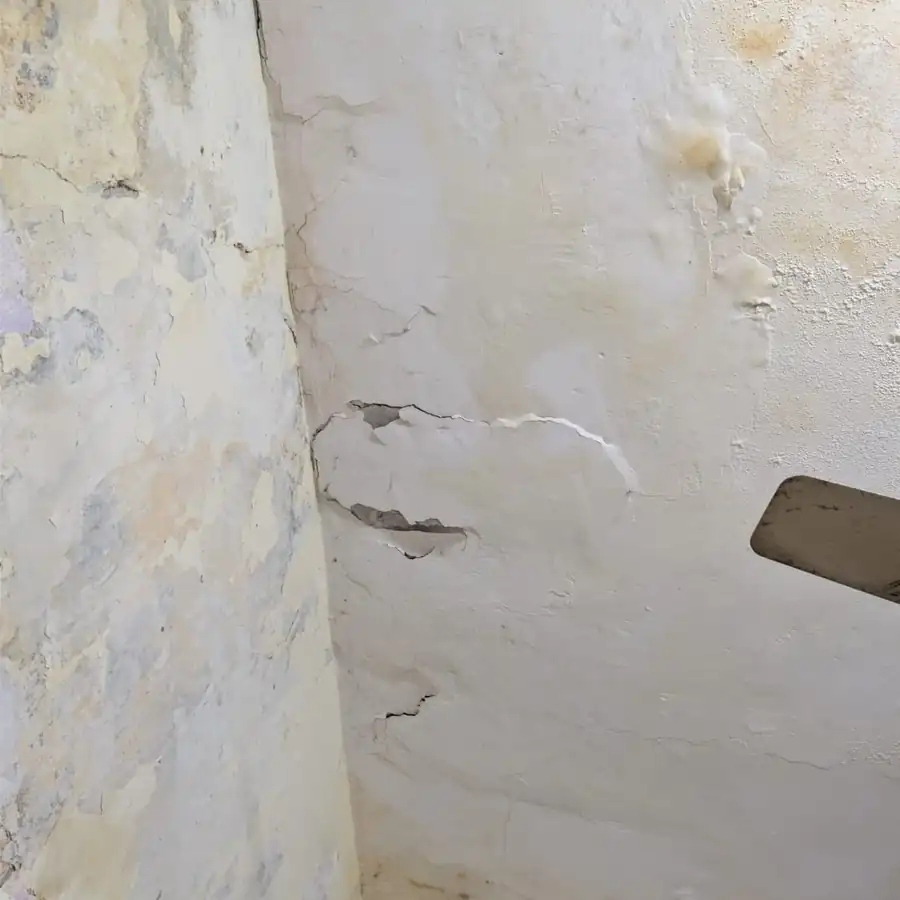
The Forensic Matrix: Finding the Root Cause
Concrete does not break off a ceiling without immense internal pressure. Local contractors will simply plaster over the void with standard cement mortar, but within three to six months, ongoing rebar oxidation will inevitably blow the new plaster off. To permanently solve the issue, a CMDA Registered Structural Engineer must first diagnose the exact mechanism causing the failure:
| The Root Cause | Engineering Pathology & Failure Mechanism | Visual Diagnostic Symptoms |
|---|---|---|
| 1. Moisture Penetration & Carbonation | In coastal Chennai, high atmospheric humidity accelerates carbonation, lowering concrete pH below 9. Passivation is destroyed, and internal steel rusts, expanding up to 6x its original volume to burst the concrete cover. | Brown rust streaks along ceiling lines, damp patches, peeling paint, and exposed, flaky rebar. |
| 2. Thermal Expansion Shock | Extreme 40°C heat cycles cause the exposed roof slab to expand rapidly by day and contract by night, shearing bottom cover concrete away from the rebar cage. | Clean horizontal shear cracks parallel to slab edges; concrete chunks detach with minimal rebar corrosion. |
| 3. Structural Overload | The slab is carrying loads exceeding design capacity (e.g. heavy unauthorized water sumps or extra floors), stretching concrete beyond tensile rupture limits. | Deep, widening continuous flexural cracks running across the mid-span of the ceiling before spalling begins. |
The Two-Pronged Engineering Solution
Once the root cause is identified, we execute a strict, two-phase structural protocol:
Phase 1: Correction (Structural Repair)
We surgically chip away all decayed concrete until reaching sound, uncarbonated substrate. Next, we eradicate rust using chemical converters and apply two coats of zinc-rich anti-corrosion primer to exposed steel. We apply a structural epoxy bonding bridge and rebuild the ceiling profile using high-strength, non-shrink polymer-modified cementitious mortar.
Phase 2: Prevention (Addressing the Moisture Source)
Repairing the ceiling without stopping moisture ingress guarantees recurrence. We specify PU Injection Grouting to seal terrace cracks from above. Homeowners must apply a high-grade anti-carbonation coating to ceilings every 3 to 5 years and immediately seal drilled anchor holes to block moisture and oxygen ingress.
Phase 1: Spalling Correction Cost Estimator
Use this interactive dashboard to estimate material and chemical execution costs for Phase 1 (Polymer-Modified Spalling Repair) based on live 2026 Chennai market rates:
Spalling Correction Estimator
Live 2026 Remediation DataTake Action: Diagnosis & Permanent Repair
Select your required engineering pathway below. We recommend an initial forensic audit to pinpoint the root cause before undertaking chemical execution:
1. Find the Root Cause (Audit)
Book a ₹5,900 Structural Site Audit. Our CMDA structural engineers will inspect your ceiling slab, map moisture channels, and determine if failure is driven by carbonation, thermal shock, or structural overload.
2. Execute the Repair (Remediation)
Already know the problem? Engage our engineering team to perform chemical rust treatments, polymer-modified mortar application, and permanent structural retrofitting to protect your building.
Frequently Asked Questions on Ceiling Concrete Spalling
Explore Related Forensic Case Studies & Engineering Guides
Concrete Falling from Ceiling & Rusted Steel Repair
Forensic remediation of spalling ceilings and corroded reinforcement in a 35-year-old coastal apartment.
Concrete Spalling & Beam-Column Repair (35-Yr Old Building)
Forensic remediation of severe column cover loss and junction shear cracks in a 35-year-old apartment complex.
Terrace Waterproofing Failure & Multi-Flat Damage
Comprehensive structural condition assessment of a 12-year-old apartment suffering cascading ceiling delamination.
Waterproofing Failure Causes: Engineering Leak Guide
Why terrace coatings fail in Chennai and how thermal imaging moisture mapping stops chronic seepage.
Dangerous Column Cracks: Diagnostic & Repair Guide
Identify 45° shear, flexural, and spalling crack patterns with engineered micro-concrete jacketing steps.
Stability Certificate for Old Buildings (30-Year Rule)
Statutory audit rules, redevelopment laws under TN Apartment Ownership Act 2022, and Form B compliance.