Settlement Cracks in a 14-Year-Old Residential Building in Choolaimedu
The Presenting Condition: Cracks That Could Not Be Ignored
The property owner of a G+2 residential building in Choolaimedu contacted Structural Sense after noticing prominent cracks rapidly developing across exterior wall surfaces in the building's cantilever zone. The structure was approximately 14 years old.
Our initial visual inspection revealed that these were not superficial paint crazing or curing shrinkage. They exhibited the textbook geometric signature of differential foundation settlement: diagonal fracture paths (approx. 45 degrees), progressive tapering (wider at the upper edge), and concentrated propagation originating from structural window and door junctions.
Because settlement cracks indicate relative physical displacement of structural footings, a comprehensive forensic structural damage inspection was initiated to diagnose the subsurface mechanics and specify the necessary engineering safeguards.
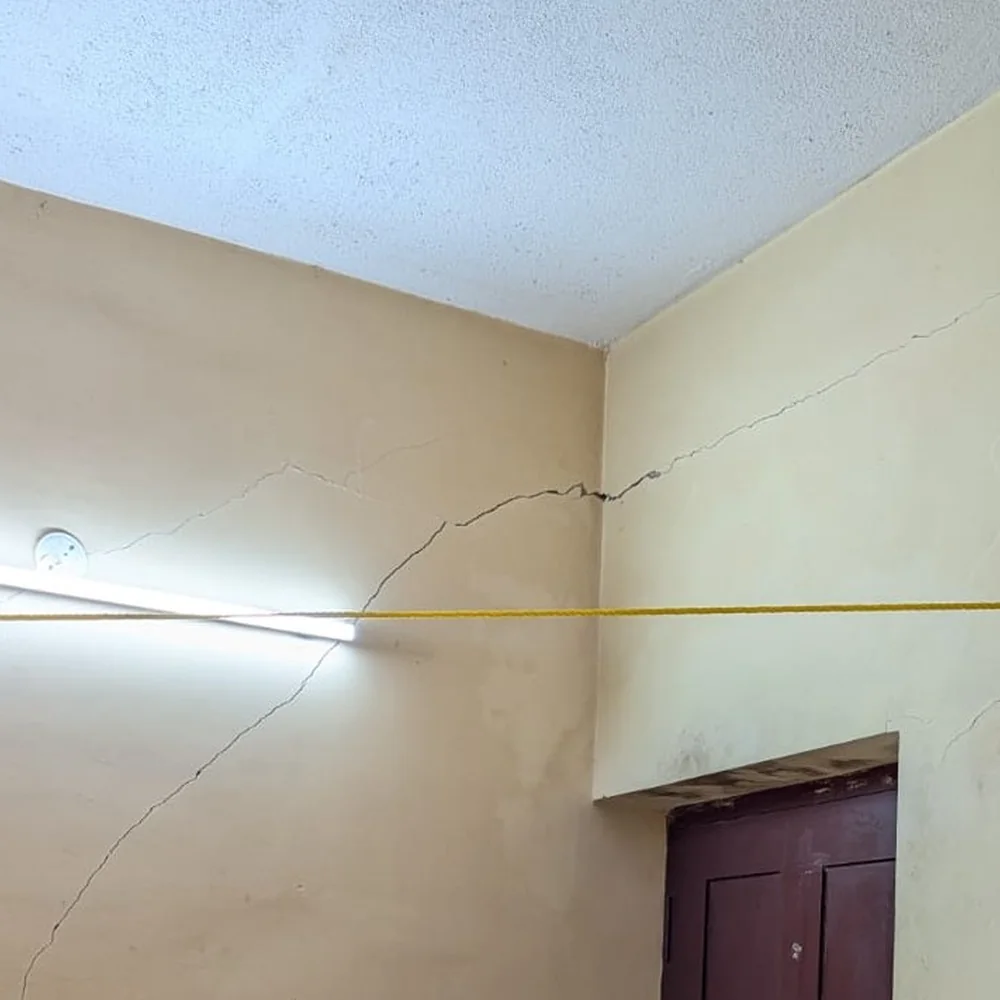
The Engineering Finding: Clay Soil Mechanics and Uncontrolled Moisture
Our forensic audit pinpointed the root cause at the subgrade level: the foundation footings in the distressed cantilever zone were bearing on expansive clay soil, and the perimeter was subjected to chronic moisture accumulation due to improper stormwater and graywater drainage.
Clay is an expansive cohesive soil characterized by high volumetric change potential. When saturated during Chennai monsoons or by local drainage overflows, the clay absorbs water molecules into its mineral lattice, generating immense swelling pressure. As the dry season returns, moisture evaporates, causing the soil matrix to desorb water and contract significantly.
Over 14 continuous annual cycles, this repeated wetting-drying hysteresis caused irrecoverable subgrade compaction beneath individual footings. The resulting differential settlement induced heavy racking shear stresses into the masonry panels and cantilever frame above, manifesting as visible diagonal cracks.
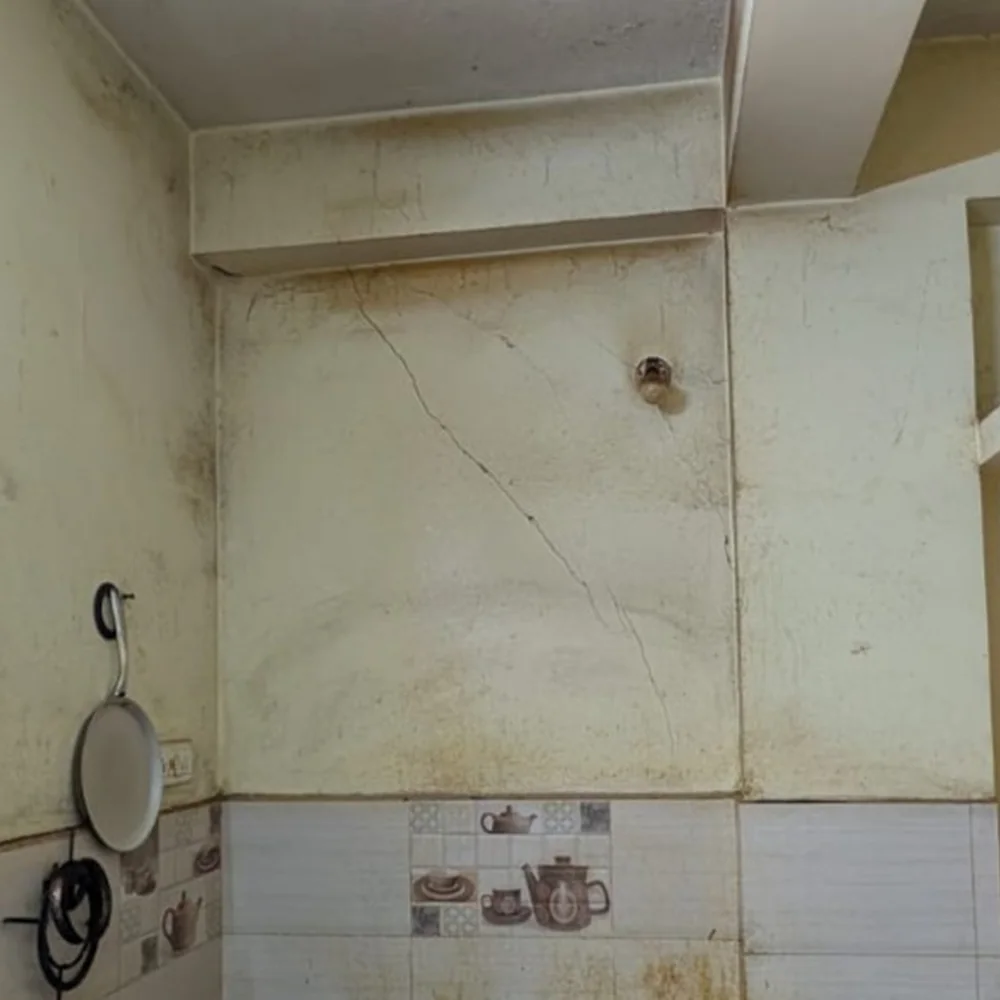
Recommended Immediate-Action Remediation Sequence
Settlement cracking on active clay soil is a progressive condition. Filling the wall cracks with cosmetic plaster or epoxy putty without addressing the subgrade foundation movement is structurally unsound because active soil displacement will inevitably reopen the cracks wider.
Structural Sense formulated a strict 3-stage engineering roadmap prioritizing foundation stability before any superstructure cosmetic finishing:
Geotechnical Soil Investigation & Bearing Assessment
Execute exploratory borehole sampling and plate load testing via soil testing services in Chennai to quantify the plasticity index (PI), liquid limit, active clay layer depth, and safe bearing capacity (SBC) under varying moisture regimes.
Moisture Interception & Subgrade Perimeter Drainage
Construct a perimeter cutoff apron and gravel trench French drain system around the affected foundation zone. This intercepts stormwater runoff, plumbing overflows, and roof downspout discharges, stabilizing subgrade moisture content year-round.
Subsurface Underpinning & Structural Crack Stitching
Execute calibrated structural foundation strengthening (such as micro-piling or pressure compaction grouting) tailored to borehole test results. Once active movement ceases, stitch diagonal masonry cracks using helical stainless-steel reinforcement and polymer-modified non-shrink structural grout.
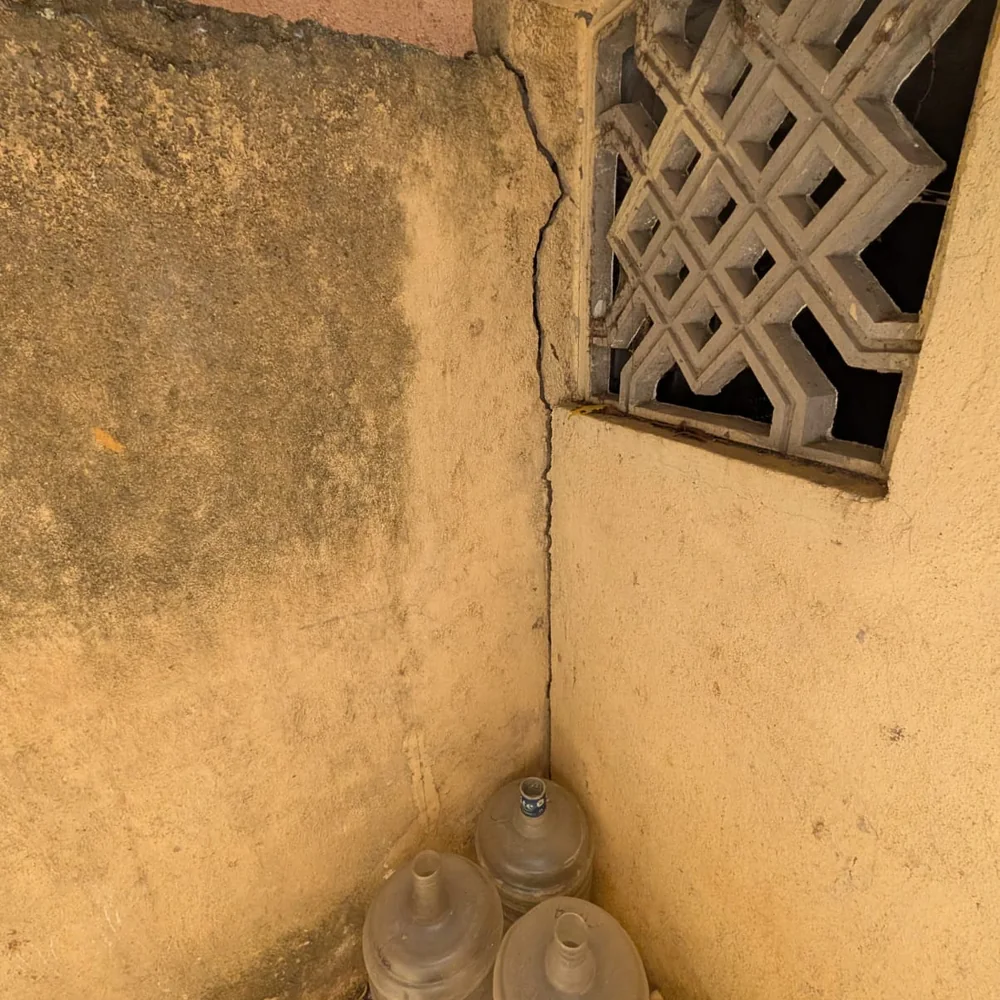
Audit Findings: Defect Severity & Action Prioritization
| Structural Zone | Observed Forensic Defect | Urgency Level | Recommended Engineering Remedy |
|---|---|---|---|
| Foundation & Subgrade | Differential Settlement on Expansive Clay | Immediate Action | Soil Borehole Audit + Drainage Cutoff + Underpinning |
| Cantilever Balcony Beams | Moisture Ingress Cracks & Section Loss | High Priority | PMM Re-profiling + Balcony Waterproofing Membrane |
| RCC Sunshades (Chajjas) | Cover Spalling & Exposed Oxidized Rebar | Medium Priority | Rust Converter + Zinc Primer + Polymer Mortar |
| Toilet Plumbing Shafts | Internal Leakage & Ceiling Dampness | Standard Action | Pressure Grouting + Scientific Waterproofing Protocol |
| Exterior Wall Surfaces | Hairline Thermal & Shrinkage Cracking | Standard Action | Elastomeric Crack Filler + Weatherproof Coating |
Comprehensive Defect Audit & Holistic Building Health
In addition to the critical foundation settlement, our forensic inspection audited multiple secondary distress zones across the 14-year-old property:
Moisture ingress from unsealed balcony tiles had induced micro-cracks along cantilever support beams. RCC sunshades showed delaminated concrete cover with exposed, corroding reinforcement. Internal toilet wet zones exhibited chronic leakage affecting lower ceiling slabs, and unterminated vertical rebar was left exposed to weather at a roof corner column.
Our engineering report provided the owners with a clear, prioritized rehabilitation plan: stabilizing the foundation first, stopping moisture ingress via scientific waterproofing in Chennai second, and completing surface structural restorations third.
Not All Cracks Are Equal. Know Which Ones Need Immediate Action.
Settlement cracks in a foundation zone on clay soil require immediate engineering intervention — not cosmetic plastering. Schedule a certified structural audit today.
Frequently Asked Questions on Settlement Cracks
Explore Related Forensic Case Studies & Engineering Guides
Building Vibration & Severe Beam Deflection Fix
Forensic NDT investigation and CFRP composite retrofitting specifications for a severe floor vibration issue.
Concrete Falling from Ceiling & Rusted Steel Investigation
Forensic analysis of ceiling concrete spalling and corroded reinforcement in a 35-year-old coastal apartment.
Beam-Column Junction Shear Crack Diagnosis
Structural pressure grouting and carbon-fiber wrapping specifications for heavy shear cracks at critical frame joints.
Ceiling Cracks & Roof Safety Guide for Homeowners
How to distinguish between superficial paint crazing and hazardous structural slab deflection cracks.
Concrete NDT Testing: Rebound Hammer & UPV Explained
Complete guide to measuring in-situ compressive strength, voids, and rebar corrosion without destruction.
CMDA Structural Stability Certificate (Form B & C)
Understanding legal safety audits, building fitness criteria, and engineer certification under TN Public Buildings Act.