Permanent Solutions for Roof Leakage & Seepage
The "Paint and Patch" Fallacy in Chennai
When a terrace leaks or a ceiling exhibits damp patches, the common instinct is to apply another coat of waterproof paint or elastomeric topcoat. However, water travels through microscopic capillary channels within the reinforced concrete matrix. The Northeast monsoon, which delivers over 60% of Chennai's annual rainfall in just 8 to 10 weeks, exerts immense hydrostatic head pressure against your building's exterior.
If the underlying cause is thermal expansion cracking, parapet upstand debonding, or defective plumbing sleeves, superficial coatings merely trap moisture underneath. In coastal zones within 5 km of the sea, salt-laden moisture attacks embedded steel rebar, causing iron oxide expansion that bursts the concrete cover. A scientific waterproofing specialist must mathematically map water pathways before specifying chemical interventions.
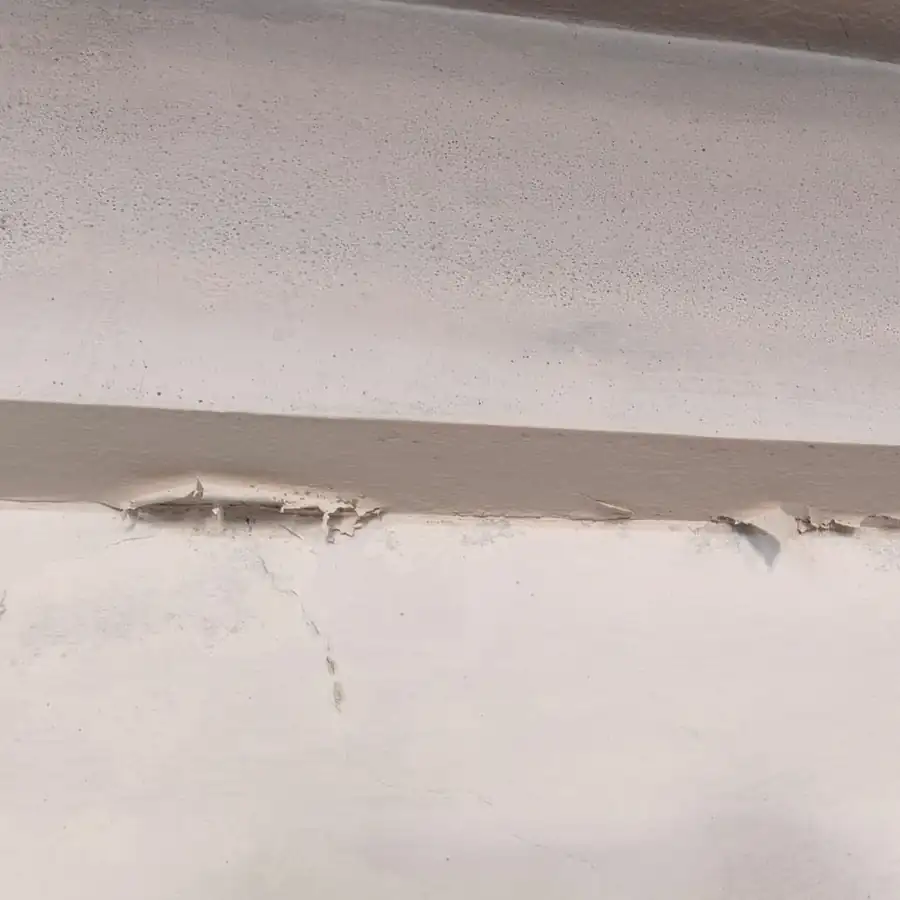
Scientific Leakage Pathology Matrix
Water follows the path of least capillary resistance. Identifying the exact structural mechanism of water ingress is the first step toward permanent, surgical remediation:
| Location of Ingress | Primary Moisture Pathway & Mechanics | Visual Symptoms & Hidden Risks |
|---|---|---|
| Open Terraces & Parapet Junctions | Thermal Expansion Dynamics: The RCC slab expands in intense 40°C heat, tearing rigid membranes at the 300mm parapet wall junction. | Bubbling surface coatings, damp patches along beams, and active ceiling dripping during monsoons. |
| Sunken Slabs (Toilets & Bathrooms) | Plumbing Pipe Penetrations: Unsealed PVC pipe sleeves allow greywater to pool invisibly in porous cinder/brickbat filler. | Stalactite mineral formations on ceiling below; chronic efflorescence creeping up adjacent bedroom walls. |
| Underground Sumps & Basements | Hydrostatic Head Pressure: Elevated groundwater tables push inward through cold construction joints between raft and retaining walls. | Rapid water level loss in sumps; persistent wall sweating and active water seepage through concrete pores. |
The Financial Threat of Unverified Waterproofing
A single monsoon season of unmitigated water ingress through an unprotected crack causes between ₹15,000 to ₹80,000 of remedial structural damage per affected room.
The most expensive mistakes occur in residential bathrooms: if floor tiles are laid without executing a strict 24-hour flood test, any subsequent sunken slab waterproofing failure requires completely demolishing tiles, screed, and sanitary fixtures. This oversight regularly costs owners ₹40,000 to ₹90,000 per bathroom to remediate.
The 2026 Diagnostic Fee Structure
Stop paying contractors to guess. Our scientific diagnostic protocol ensures you only pay for the exact chemical remediation required to seal the leak:
| Service Tier | Diagnostic Scope & Deliverable | Professional Fee |
|---|---|---|
| Diagnostic Leakage Audit | Scientific moisture mapping, thermal imaging inspection, root-cause identification, and remedial planning for localized seepage (Terraces/Toilets). | ₹1,500 (Plus GST) |
| Scientific Chemical Remediation | Execution of PU Pressure Grouting, Crystalline Waterproofing, or Mother-Concrete Elastomeric Membranes based on audit findings. | Quoted Post-Audit |
*Note: The ₹1,500 Leakage Audit is strictly for diagnosing moisture ingress. If wide structural cracks or load-bearing column/beam concerns are observed, a ₹5,900 Structural Damage Inspection will be recommended.
The 3-Step Remedial Diagnostic Roadmap
Advanced Source Tracing & Capillary Mapping
We trace the exact entry point of moisture. A damp patch appearing in a living room ceiling often originates from a hairline parapet fissure or an unsealed balcony drain 10 meters away.
Thermal & Electronic Moisture Profiling
Using Protimeter Electronic Moisture Meters and high-resolution FLIR Thermal Imaging Cameras, we map temperature deltas and quantify subsurface saturation levels without destructive chipping.
Surgical Remediation Specifications
Instead of demolishing entire floor slabs, we specify targeted engineering solutions: high-pressure Polyurethane (PU) Injection Grouting to seal active water leaks, Deep Crystalline Matrix Barriers for sumps, and fiber-reinforced elastomeric upstands for terraces.
Scientific Waterproofing Services — Stop Chronic Seepage
Book a ₹1,500 Diagnostic Leakage Audit to identify the exact pathway causing your water ingress. Let forensic engineers solve what local contractors couldn't.
Frequently Asked Questions on Waterproofing Failures
Explore Related Forensic Case Studies & Engineering Guides
Terrace Waterproofing Failure & Multi-Flat Damage
Comprehensive structural condition assessment of a 12-year-old apartment suffering cascading ceiling delamination.
Concrete Falling from Ceiling & Rusted Steel Repair
Forensic remediation of spalling ceilings and corroded reinforcement in a 35-year-old coastal apartment.
Concrete Spalling & Beam-Column Repair (35-Yr Old Building)
Forensic remediation of severe column cover loss and junction shear cracks in a 35-year-old apartment complex.
Ceiling Cracks & Roof Safety Guide for Homeowners
How to distinguish between superficial paint crazing and hazardous structural slab deflection cracks.
Dangerous Column Cracks: Diagnostic & Repair Guide
Identify 45° shear, flexural, and spalling crack patterns with engineered micro-concrete jacketing steps.
Stability Certificate for Old Buildings (30-Year Rule)
Statutory audit rules, redevelopment laws under TN Apartment Ownership Act 2022, and Form B compliance.