Wall Dampness & Seepage: The Engineering Solution
The Physics of Peeling Paint (Rising Damp Explained)
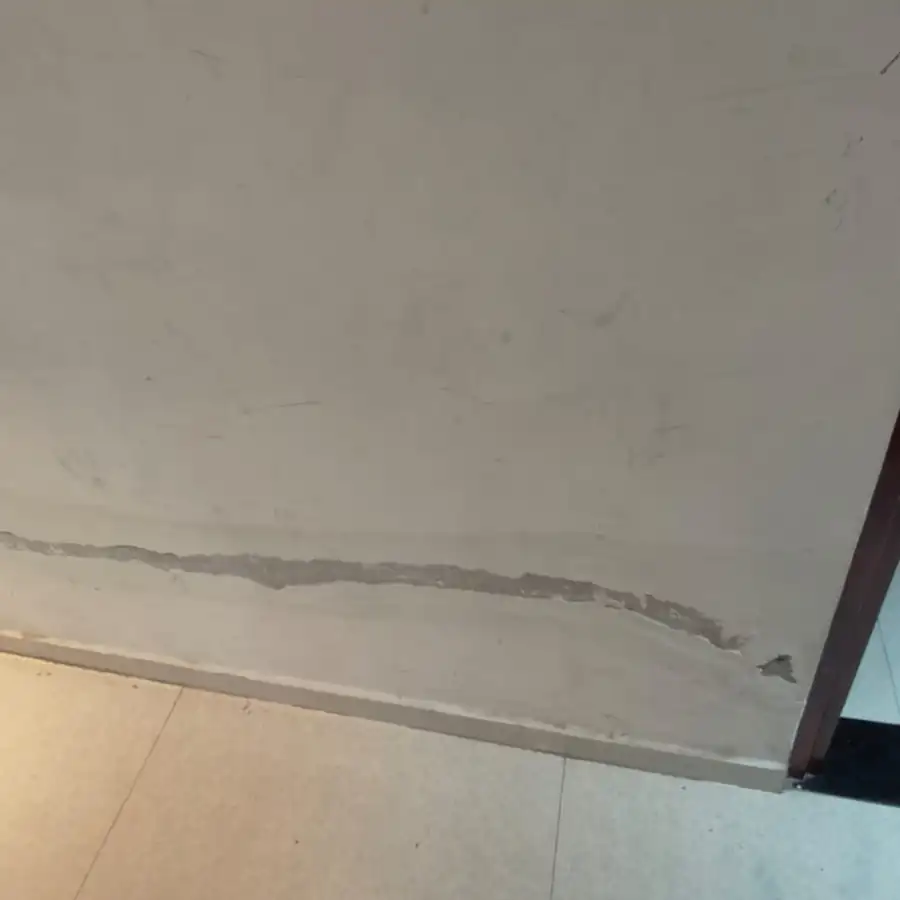
Brick masonry and cement plaster are porous materials with fine interconnected capillaries. When groundwater contacts your foundation, a physical phenomenon called Capillary Action literally draws moisture upward into the wall against gravity. As this moisture evaporates into the ambient room air, it deposits dissolved subsoil minerals.
These minerals crystallize as salt deposits (a process known as efflorescence). The expanding crystal matrices exert intense sub-surface hydrostatic pressure, physically flaking off your paint and crumbling plaster. This is why cosmetic repainting always fails within months. You cannot stop hydraulic suction with a surface coat of wall putty or primer.
Moisture Pathology & Remediation Estimator [2026]
Select where the dampness is occurring in your building. The calculator will determine the underlying failure mode and estimate the permanent chemical remediation cost based on current Chennai standards:
Diagnostic Remediation Tracker
Live 2026 Chemical Injection MetricsEngineering Prerequisite
Treating symptoms without tracing the source leads to repeated failures. A ₹1,500 Diagnostic Moisture Audit using thermal imaging is required before executing chemical injection.
The Triage Matrix: 3 Types of Building Dampness
Before formulating any chemical remediation, our engineers scientifically diagnose the exact ingress mechanism. Over 19+ years of forensic testing, we trace 100% of moisture failures to three distinct physical pathways:
| Dampness Pathology | Ingress Mechanism | Engineered Remediation Protocol |
|---|---|---|
| Rising Damp | Capillary suction of groundwater through foundation brickwork due to a missing or breached Damp Proof Course (DPC). | Chemical DPC Injection: Precision drilling of ports at the wall base and pressure injecting silane/siloxane cream to form a continuous hydrophobic barrier. |
| Penetrating Damp | Wind-driven monsoon rains penetrating micro-cracks in exterior facade plaster caused by thermal expansion. | Exterior Facade Waterproofing: Routing plaster micro-fractures, polyurethane joint sealing, and applying high-build elastomeric waterproof coatings. |
| Internal Seepage | Degraded, porous cement tile grout in bathrooms allowing shower water to seep into adjacent brick partitions. | Non-Destructive Epoxy Regrouting: Mechanically grinding out failing cement grout and replacing it with 100% waterproof epoxy resin without breaking tiles. |
Stop Seepage Permanently. Get an Engineered Solution.
Do not hire a painter to do a Structural Engineer's job. We diagnose the true moisture source and provide scientifically proven chemical remediation:
1. Diagnostic Moisture Audit
Book a ₹1,500 Site Inspection. We utilize electronic moisture meters and thermal imaging cameras to trace the exact source of water ingress without invasive breaking.
2. Execute Chemical Remediation
Already know the source? Engage our execution team to perform precision Chemical DPC injection, Epoxy Regrouting, and exterior elastomeric waterproofing.
Frequently Asked Questions on Wall Dampness & Seepage
Explore Related Forensic Case Studies & Engineering Guides
Compound Wall Crack Repair & Soil Settlement
Geotechnical soil investigation and underpinning specifications for a settling compound wall on clayey subsoil.
Concrete Falling & Rebar Corrosion Forensic Audit
Half-cell potential corrosion mapping and polymer-modified mortar repair specifications for coastal spalling.
Concrete Spalling & Beam-Column Repair (35-Yr Old Building)
Forensic remediation of severe column cover loss and junction shear cracks in a 35-year-old apartment complex.
Why Waterproofing Fails: The Engineering Guide
Hydrostatic pressure analysis, negative side coating failures, and scientific polyurethane injection.
Dangerous Wall Cracks? Types & Repair Cost Estimator
Calculate live epoxy injection grouting and structural stitching repair costs per linear foot in Chennai.
NDT Concrete Testing: Rebound, UPV & Cost Guide
Calculate live UPV and Rebound Hammer testing costs with IS 13311 quality grading standards.