Types of Wall Cracks: When to Worry?
The Danger of Misdiagnosis
The biggest mistake property owners make is treating every crack as a harmless paint defect. If you instruct a local painter to fill an active Structural Shear Crack with basic wall putty, the building will continue to settle, the putty will tear open within weeks, and the core structural damage will only worsen in secret.
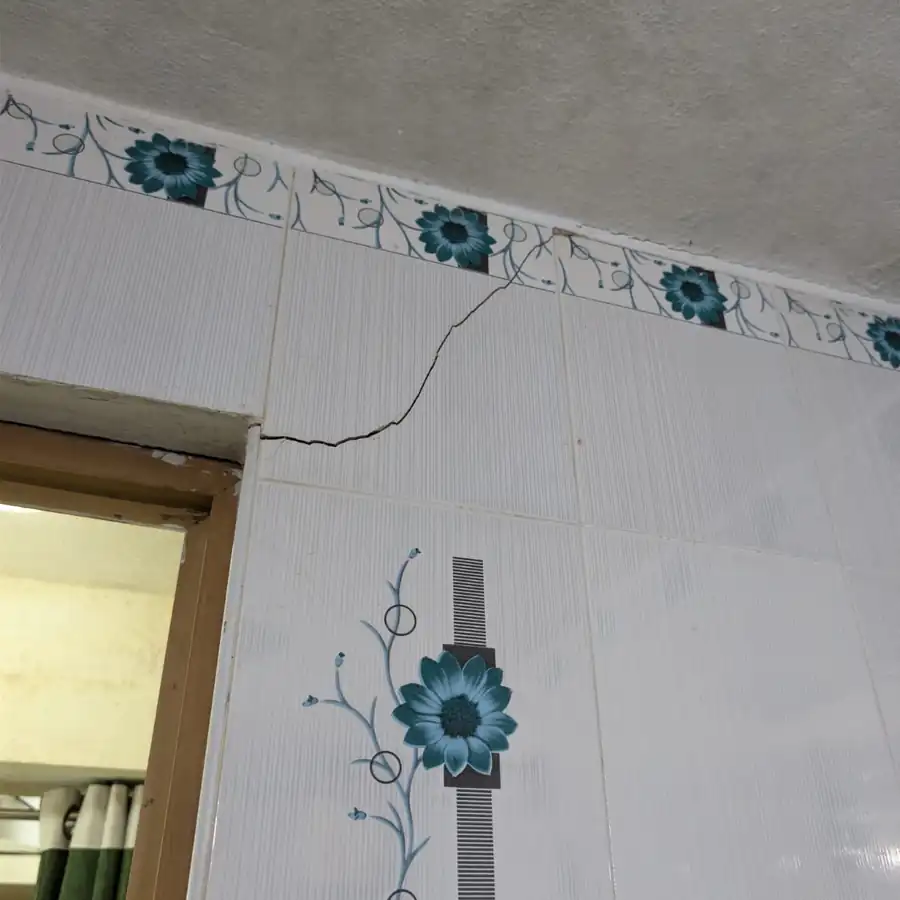
Interactive Crack Identifier Tool
Use this diagnostic dashboard to evaluate your visual symptoms. By cross-referencing the shape of the crack with its physical substrate location, you can instantly predict whether it is a cosmetic issue or a structural emergency:
Visual Pathology Identifier
Select Shape & SubstrateRecommended Engineering Action
Do not use putty. This indicates the foundation is sinking or yielding. An immediate structural audit is required to prevent progressive collapse.
The Structural Triage Protocol
As a CMDA Registered Structural Engineer, I separate crack failures into three distinct risk categories based on Chennai's unique environmental and soil conditions. Structures built on expansive clayey soils undergo severe volumetric swelling during monsoons and intense shrinkage during hot summers:
Cosmetic Shrinkage (No Need to Worry)
These are fine, interlocking hairline "map" cracks that only exist in the surface plaster layer. They are caused by plastic shrinkage during rapid plaster curing or minor seasonal thermal changes. Action: Can be safely routed and filled with flexible elastomeric sealants by a skilled painter without structural intervention.
Thermal Joint Separation (Monitor Closely)
Perfectly vertical cracks that appear where a brick wall meets an RCC concrete column. Because concrete and brick expand at different rates in Chennai's 40°C heat, the unreinforced joint interface tears open. Action: Requires professional PU injection grouting and fiber mesh plastering to seal against moisture ingress.
Active Shear Cracks (Call an Engineer Immediately)
Deep, 45-degree diagonal stair-step cracks slicing through masonry, or horizontal cracks across concrete columns. This signifies foundation settlement—one corner of the building is sinking, tearing the load-bearing frame apart. Action: Requires an immediate on-site Structural Audit, followed by Structural Stitching and High-Pressure Epoxy Grouting.
Structural Risk Matrix by Crack Pattern
| Visual Pattern | Primary Pathology | Severity Level | Mandatory Protocol |
|---|---|---|---|
| Hairline Webbing (<1mm) | Plaster curing drying shrinkage | Low (Cosmetic) | Elastomeric filler & repainting |
| Vertical Pillar Junction | Differential thermal expansion | Moderate Risk | PU seal & crack arrestor mesh |
| Diagonal Stair-Step (>3mm) | Subsoil differential settlement | Critical Risk | Epoxy pressure grouting + Stitching |
| Horizontal Beam/Pillar Crack | Flexural bending / Rebar corrosion | Severe Failure Risk | Immediate propping + CFRP jacketing |
Stop Guessing. Get Data-Driven Answers.
If your dashboard indicates Moderate or Critical risk, hiding the problem behind putty or paint is hazardous. Secure your building's structural integrity today:
1. Professional Site Audit
Book a ₹5,900 Site Inspection. We utilize precision digital crack gauges and tell-tales to measure active movement, verify load paths, and provide a definitive forensic diagnosis.
2. Structural Retrofitting
Already confirmed it's a structural failure? We execute high-pressure epoxy injection grouting, rebar stitching, and foundation stabilization to permanently secure the structure.
Frequently Asked Questions on Types of Wall Cracks
Explore Related Forensic Case Studies & Engineering Guides
Compound Wall Crack Repair & Soil Settlement
Geotechnical soil investigation and underpinning specifications for a settling compound wall on clayey subsoil.
Concrete Spalling & Beam-Column Repair (35-Yr Old Building)
Forensic remediation of severe column cover loss and junction shear cracks in a 35-year-old apartment complex.
Building Vibration & Severe Beam Deflection Fix
Forensic NDT investigation and CFRP composite retrofitting specifications for a severe floor vibration issue.
Dangerous Wall Cracks? Types & Repair Cost Estimator
Calculate live epoxy injection grouting and structural stitching repair costs per linear foot in Chennai.
Dangerous Column Cracks: Diagnostic & Repair Guide
Identify 45° shear, flexural, and spalling crack patterns with engineered micro-concrete jacketing steps.
House Construction Cost in Chennai 2026 (Per Sq Ft)
Live predictive cost analytics calculator and material breakdown for TMT steel, concrete, and finishes.