Structural Damage Signs:
Is Your House Safe?
The Silent Threat: Recognizing Distress
Buildings rarely collapse without warning. Concrete and masonry always exhibit visible symptoms of distress before reaching ultimate structural failure. The danger lies in misinterpreting these signals as purely cosmetic paint defects. Applying wall putty over an active diagonal shear crack is a dangerous illusion that hides internal distress.
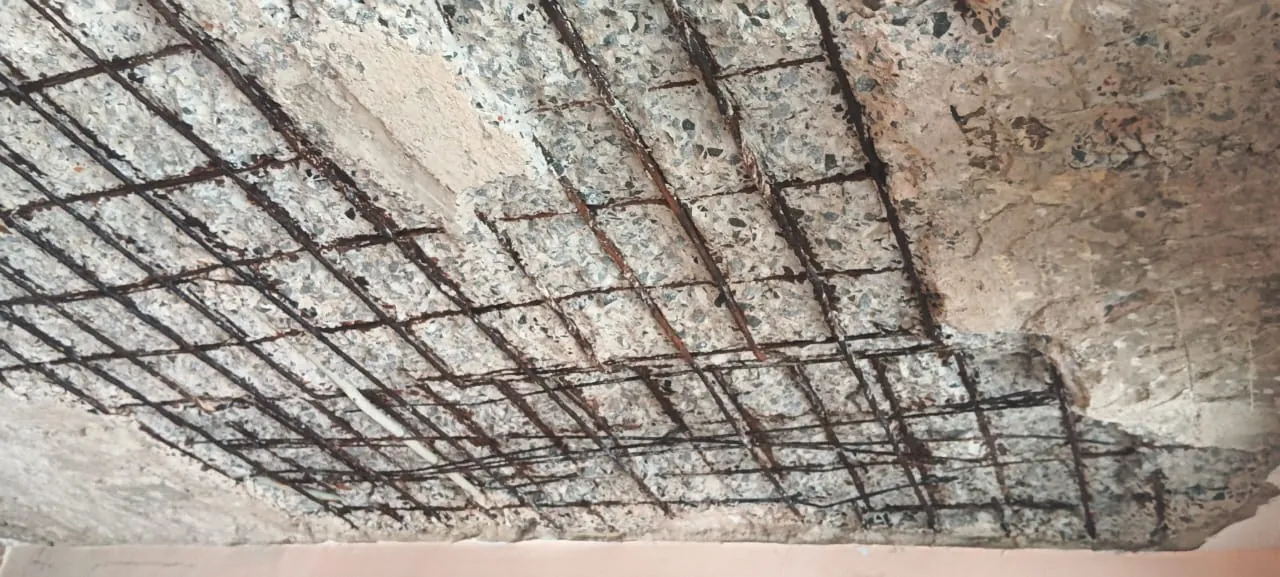
Distinguishing minor superficial settlement from a critical loss of load-bearing capacity dictates whether your building requires simple aesthetic touch-ups or an immediate emergency retrofitting intervention.
Evaluate Your Building's Structural Health
Select the visual symptoms you are observing in the interactive analyzer below to instantly evaluate the severity of the structural distress:
Structural Severity Analyzer
Live Damage Assessment MatrixThe NDT Testing Mandate
Never authorize contractors to patch structural cracks with cosmetic putty. If your building exhibits diagonal shear cracking or spalling columns, the internal steel reinforcement is actively compromised. A true diagnosis requires Non-Destructive Testing (NDT) such as Rebound Hammer or UPV scanning to map internal concrete density and rebar corrosion. Without empirical data, any repair is pure guesswork.
Classifying The Damage Pathology
Understanding the pathology of structural distress is the essential first step toward effective remediation:
Non-Structural vs. Structural Cracks
Thin, vertical hairline cracks (under 2mm) are usually non-structural, caused by seasonal thermal movement or plaster shrinkage. However, wide 45-degree diagonal cracks, horizontal cracks along beam junctions, or stair-step fractures tracking through masonry indicate active differential settlement or loss of load-bearing shear capacity.
The Danger of Spalling (Concrete Carbonation)
When concrete delaminates from ceilings or pillars to expose rusted steel, your building is suffering from Concrete Carbonation. Atmospheric carbon dioxide and saline humidity destroy the concrete's alkaline passivating layer. The rebar rusts, expands up to 7 times its original volume, and blows off the cover concrete—severely reducing load capacity.
Diagnose Before You Repair
Do not wait for cosmetic distress to evolve into irreversible structural failure. Secure your asset with mathematical data and engineered repair protocols:
1. Book a Damage Inspection
Book a ₹5,900 Site Inspection. Our CMDA registered engineers will map the cracks, execute NDT scans, and calculate the exact loss of structural capacity.
2. Structural Strengthening
Already have severe damage? Engage our specialized execution team to perform precision FRP column jacketing, micro-concreting, and structural stitching.
Frequently Asked Questions on Structural Damage Signs
Explore Related Forensic Case Studies & Engineering Guides
Concrete Falling & Rebar Corrosion Forensic Audit
Half-cell potential corrosion mapping and polymer-modified mortar repair specifications for coastal spalling.
Concrete Spalling & Beam-Column Repair (35-Yr Old Building)
Forensic remediation of severe column cover loss and junction shear cracks in a 35-year-old apartment complex.
Compound Wall Crack Repair & Soil Settlement
Geotechnical soil investigation and underpinning specifications for a settling compound wall on clayey subsoil.
Dangerous Wall Cracks? Types & Repair Cost Estimator
Calculate live epoxy injection grouting and structural stitching repair costs per linear foot in Chennai.
Dangerous Column Cracks: Diagnostic & Repair Guide
Identify 45° shear, flexural, and spalling crack patterns with engineered micro-concrete jacketing steps.
NDT Concrete Testing: Rebound, UPV & Cost Guide
Calculate live UPV and Rebound Hammer testing costs with IS 13311 quality grading standards.