Dangerous Wall Cracks? Severity & Repair Guide
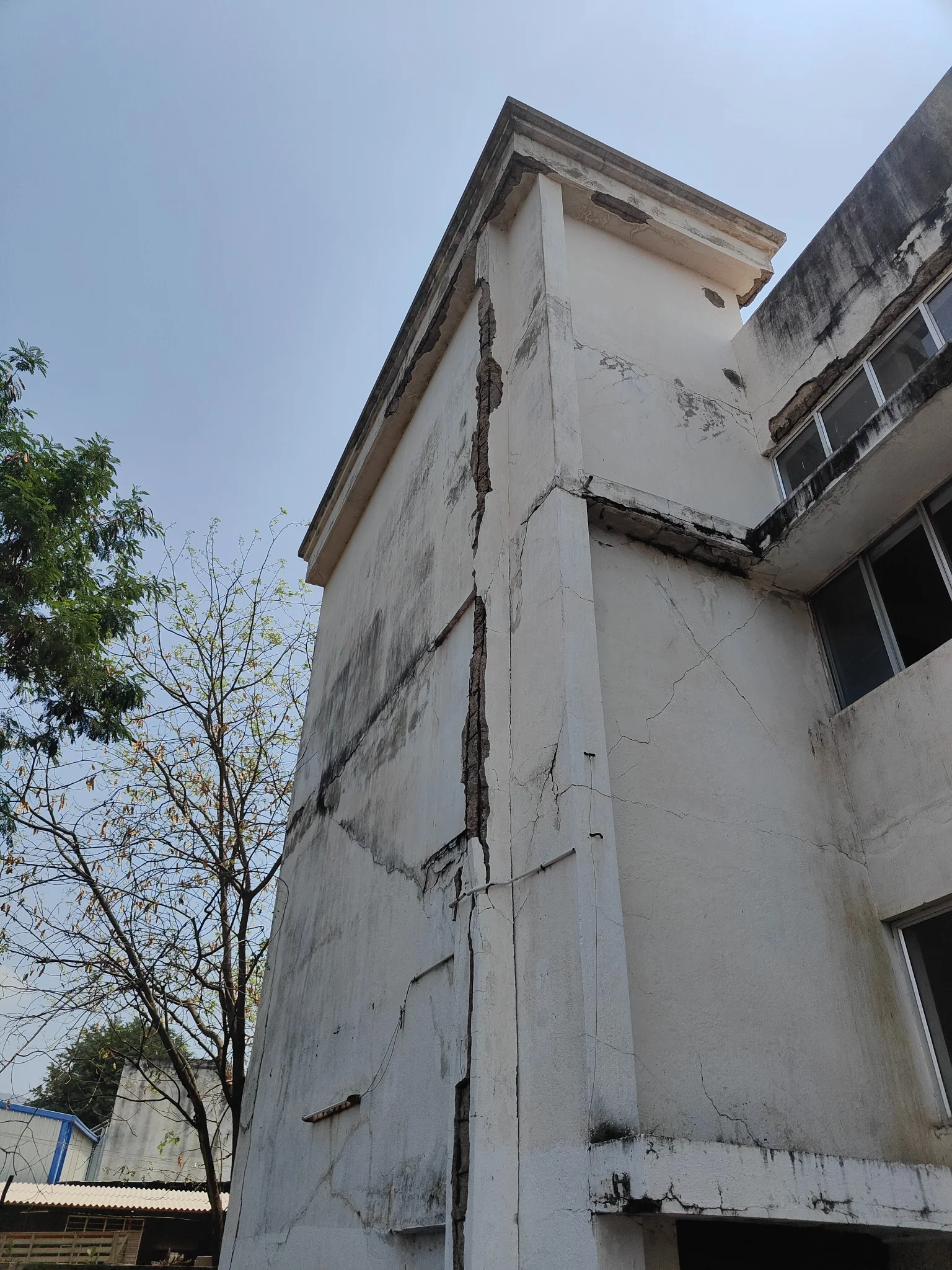
The Forensic Matrix: Deciphering the Geometry
The direction, width, and location of a crack tell a Structural Engineer a specific story about the invisible forces acting on your foundation. Attempting to fill these with basic putty or cement is futile; the building's movement will simply tear the putty apart within months.
| Visual Crack Pattern | The Root Cause Pathology | Structural Risk Level |
|---|---|---|
| Map / Web Cracking Fine, interlocking hairline lines in the plaster. |
Plastic Shrinkage: Usually a failure of the plaster curing process, not the bricks or columns beneath. It is a surface tension issue. | Low (Cosmetic) |
| Vertical Separation Cracks Straight lines where brick meets a concrete column. |
Thermal/Material Expansion: Concrete and brick expand at different rates in Chennai's heat, causing the joint to tear apart. | Moderate (Water Ingress Risk) |
| Diagonal / Stair-Step Cracks Cracks stepping up the wall like a staircase at 45 degrees. |
Foundation Settlement / Shear: One side of the foundation is sinking into the soil, tearing the load-bearing masonry apart. | Critical (Failure Risk) |
Predictive Crack Severity & Repair Estimator
Use this interactive dashboard to analyze your crack pattern. It will instantly diagnose your risk level and calculate the estimated cost of executing a permanent structural epoxy injection or stitching protocol.
Crack Pathology Estimator
Live 2026 Structural Repair Metrics
The Two-Phased Solution: Correction & Prevention
If your dashboard shows Moderate or Critical risk, pasting wall putty is not an engineering solution. We execute a strict two-phase protocol to fuse the crack and prevent the building from settling further.
Phase 1: Correction (Epoxy Grouting & Stitching)
For separation cracks, we drill injection ports along the fault line and pump high-strength, low-viscosity Epoxy or Polyurethane (PU) resin under pressure. This physically bonds the separated masonry back together with a tensile strength higher than the original concrete.
Phase 2: Prevention (Addressing Settlement)
If the root cause is diagnosed as foundation settlement (diagonal cracks), sealing the crack is useless if the building continues to sink. We engineer solutions such as foundation underpinning or micropiling to permanently stabilize the soil beneath the footing.
Take Action: Diagnosis & Repair
Do not wait for a moderate crack to become a critical foundation failure. Select the service you require below.
1. Find the Root Cause
Book a ₹5,900 Structural Site Audit. Our engineers will utilize digital crack gauges to map the load path, analyze settlement patterns, and determine the exact forensic cause.
2. Execute the Repair
Already have an engineering report? Engage our execution team to perform high-pressure epoxy injection grouting and permanent structural stitching.