Structural Damage Signs: Is Your House Safe?
Aging vs. Failing: The Critical Difference
Every building settles and ages. Hairline cracks in plaster or slightly faded paint are cosmetic issues. However, when the primary load-bearing skeleton—your columns, beams, and foundation—begins to yield, the building will signal distress. Ignoring these signals transforms a simple repair job into an emergency evacuation.
The Structural Health Self-Audit
Use this proprietary diagnostic dashboard. Select the symptoms you currently observe in your building, and the algorithm will calculate your estimated Structural Health Score.
Building Health Evaluator
Select your current property symptoms
Engineering Recommendation
Your structure appears stable. Continue with routine annual maintenance and monitor for any future changes.
The 4 Red Flags of Structural Failure
If your score dropped below 80%, you are likely experiencing one of these four critical load-bearing failures.
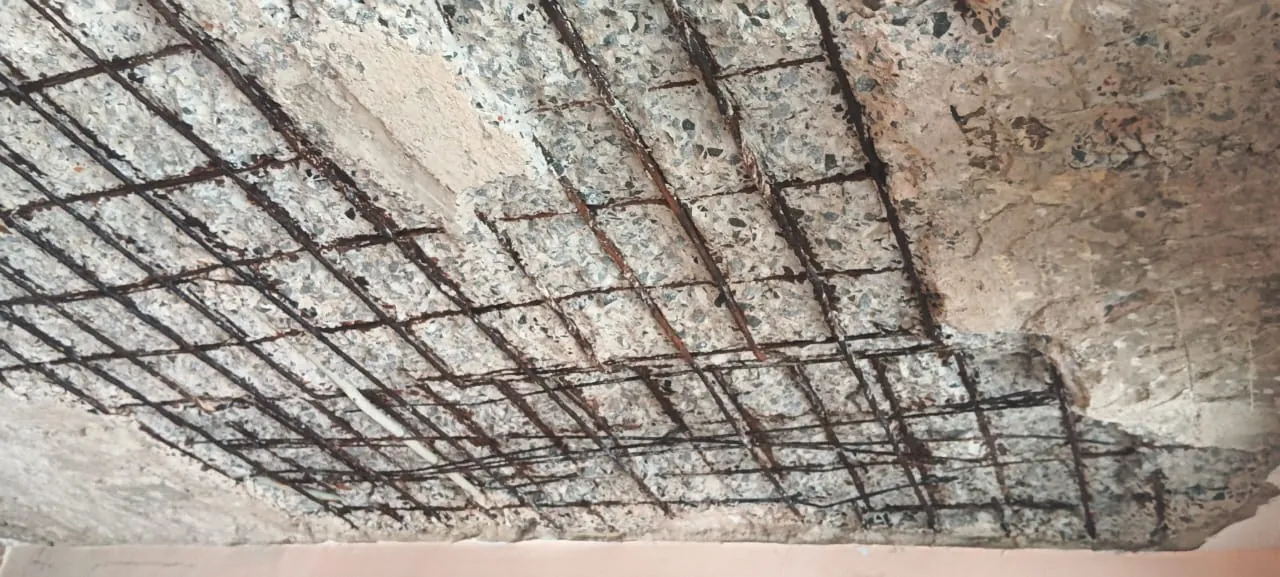
Spalling & Concrete Cancer (See Image Above)
When you look up and see rusted iron bars exposed in your ceiling, it is a critical emergency. The steel has oxidized due to moisture, expanded, and blown the concrete cover off. The slab is actively losing its load-bearing capacity and requires immediate micro-concreting and epoxy treatment.
Foundation Settlement (Jammed Doors)
If doors and windows suddenly stop closing properly, or you see gaps forming between the wall and the wooden frame, it rarely means the wood has warped. It usually indicates that the foundation beneath that wall has sunk into the soil, skewing the entire geometry of the house.
Diagonal & Shear Cracking
Hairline cracks are harmless. However, deep cracks that look like a staircase stepping up a brick wall, or horizontal cracks slicing through an RCC concrete beam, indicate active structural shear. The building is tearing under stress it cannot handle.
Sagging or Bouncing Floors
If you drop a marble and it rolls to the center of the room, or if the floor feels "bouncy" when you walk, the floor slab or joists are suffering from 'deflection.' They are bending under weight and require immediate propping and structural retrofitting.
Do Not Wait for a Collapse.
If your building is showing symptoms of structural distress, secure your family and your asset today. Book a ₹5,900 Site Inspection Audit for a complete forensic analysis and stability certification.